
Your hotel email program doesn’t need more time. It needs better targeting.
Your hotel email program doesn’t need more time. It needs better targeting.
Running hotel marketing isn’t one job. It’s five. You’re the strategist, the copywriter, the analyst, the coordinator, and the person who handles whatever comes in that morning. Segmentation keeps landing on next quarter’s list — not out of skepticism, but out of an honest accounting of the hours available.
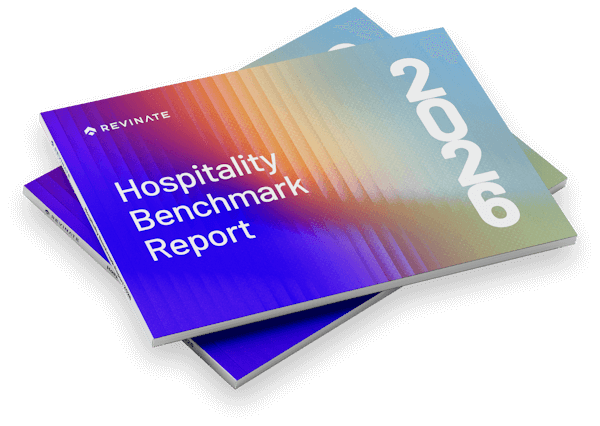
The 2026 Hospitality Benchmark Report put numbers to exactly that gap. Analyzing 2.8 billion emails sent by hotels globally, one finding stood out: businesses using segmented hotel email marketing — sending to lists of fewer than 5,000 contacts — hit a 43.3% open rate. Hotels sending to their full list without segmentation averaged around 30%. Conversion rates on large blast sends are 10x lower than on targeted sends.
Most hotel marketing managers already know it works — they’ve seen similar data before. The reason it’s not happening isn’t skepticism — it’s time. There’s always a more pressing campaign, a deadline that moved, a request from ownership.
Here’s the good news: the version of segmentation that actually moves your numbers doesn’t have to be a massive undertaking, if you have a customer data platform as the foundation of your tech stack. For Revinate customers, the guest data is already in Revinate Guests. The automations are already built into Revinate Marketing. Some of the highest-return changes — upsell offers in confirmation and pre-arrival emails — require almost no extra setup because those emails are already scheduled and sending.
This post breaks down where the biggest performance gaps are, why they exist, and what the lowest-effort path to closing them looks like — starting with your next campaign.
How to improve hotel email open rates
If your open rate is flat, there are two questions worth asking before you change anything else:
Is your subject line giving the right person a reason to open?
And are you sending to the right people?
Our 2026 Hospitality Benchmark Report shows what happens when you address both. Hotels sending to their full list without segmentation average around a 30% open rate across North America. Hotels sending to segments with 5,000 addresses or fewer hit 43.3% — with a 4.2% click-through rate and a 0.5% conversion rate. Conversion rates on sends of 50,000 or more are 10x lower than on targeted sends.
Within that difference are two levers at work. The first is the message: sender name and subject line are the only two things a recipient sees before deciding whether to open. If you’re A/B testing, change one at a time — change both at once, and you won’t know what moved the number.
The second is the audience: a segmented list opens better because the message is more likely to apply to the intended recipients. Relevance drives opens just as much as a strong subject line does, if not more.
In addition, high-volume, batch-and-blast sends damage your sender reputation over time. Every future campaign gets a little harder to land in the inbox until they finally ignore you completely or unsubscribe. Smaller lists can safeguard you from that.
The types of hotel email campaigns that perform best
Once list size is addressed, campaign type is the next-largest driver of click-throughs and conversions. And the benchmark data shows a wide range:
One-time campaigns — your one-off emails — average an open rate of 31.5%, a click-through rate of 1.9%, and a conversion rate of just 0.1%.
Cart abandonment emails hit a 63% open rate and a 6.8% conversion rate. On a list of 1,000 recipients, that’s 67 more bookings than a standard one-time campaign. These are the highest-intent guests in your database — they found their way into your booking engine, and didn’t complete the reservation for several reasons. But we know they’re already interested, and reaching back out with a timely email is one of the simplest high-return moves available.
Cancellation recovery emails average a 14.1% click-through rate. Guests who cancelled are often still planning a trip — they may have just hit a snag on dates or price. A well-executed recovery email ensures they don’t book elsewhere.
One of the most overlooked campaign types? Double opt-ins — emails sent to re-engage cold contacts and confirm they still want to hear from you — deliver an average booking value of $3,600 and 17 room nights per campaign. That’s not a typo. Re-permission campaigns might feel counterintuitive because you’re shrinking your list, but the guests who confirm are your most engaged contacts. Cold lead emails convert upwards of 6.5%, with average booking values over $3,300. Follow-ups still matter.
Confirmation and pre-arrival emails are where that $93–$95 actually comes from — and they’re already in your send schedule.
One more tactic worth including: put your sales phone number in your automated campaign emails. When agents can pull up a guest’s profile enriched by a CDP (Rich Guest Profile) before a call, they close more deals. The email gets the conversation started — the agent closes it.
How to drive upsell revenue from hotel confirmation and pre-arrival emails
Confirmation and pre-arrival emails are the highest-open emails your property sends. Open rates range from 55.7% to 66.9% — well above those of any promotional campaign. And most hotels aren’t using them to drive enough revenue.
The benchmark data shows $93 in upsell revenue per booking from confirmation emails and $95 from pre-arrival emails. Guests open these to verify their reservation and start building anticipation for the trip. They’re in a high-receptivity mindset before they’ve even arrived. And that’s precisely the moment to put an offer in front of them.
The top upsell category? Food and beverage, accounting for 34% of upsell revenue. Dining experiences consistently rank as the highest-value incremental revenue opportunity year-over-year. Check-in and check-out upgrades account for 24% of the total. Activities and special campaigns together make up another 31%.
There are a few things that affect whether the click actually happens:
CTA language matters here as much as anywhere. “Upgrade Now” is transactional. “Enhance My Stay” creates anticipation — it puts the guest in the moment before they’ve arrived. If you’re using Smart Button AI, test and optimize your button text.
Make sure the offer matches the guest. Families with children on the reservation are strong candidates for early check-in. Couples in a premium room may respond to a champagne arrival package. Revinate’s segmentation feature lets you match the offer to the profile — something worth using here, because a poorly matched offer is a missed open.
And make sure your images and descriptions are doing work. The open rate is already there. The click is what needs attention.
Confirmation and pre-arrival emails are already in your automated send schedule. Adding a well-matched upsell offer is one of the lowest-effort, highest-return changes you can make. The audience is already engaged.
How to segment your hotel email list
The guest data you need to start segmenting is already in your CDP. Most teams aren’t using it because of bandwidth constraints — not because it isn’t there.
It doesn’t have to be hard — or take a ton of your time. Here’s a short list of segments that are easy to build and consistently perform:
- Guests with children or families
- Local guests within roughly 100 miles — driveable distance
- Guests who stay during a specific holiday period
- Repeat guests
- Guests from a particular state or region
- Extended stay guests (5+ nights)
- Guests who have shown interest in amenities like the spa or dining
- NPS promoters — guests who rate 8 or above on post-stay surveys
- High-value guests who book premium rooms or have met a minimum spend threshold
And you don’t need a new campaign for each of these. Sometimes the difference between a generic send and a segmented one is as simple as swapping an image and a headline — adults by the pool versus children with ice cream. That swap is often enough to resonate with future guests. Start with one or two segments for your next campaign. Look at the numbers, and build from there.
Start with one thing
The performance gap between an average hotel email marketing program and a strong one isn’t a massive difference in strategy — it lies in the execution. And the execution required is smaller than most teams assume.
Smaller lists. Matched offers. A few automations running in the background. That will get you most of the way there.
Pick one thing from this post and action it before your next send. Run a segment instead of your full list. Add an upsell offer to your pre-arrival email. Or switch on cart abandonment if it’s not running. Any one of those moves the needle — you don’t need all three at once. The hotels that will win in 2026 won’t be the ones with more tech. It’ll be the ones who are activating what they have.
Register for the 2026 Hospitality Benchmark Report Leadership Series →
Join us for an upcoming session where we’ll go deeper on the email metrics that matter most — and hear directly from Christine Malfair, Fractional CMO of Malfair Marketing, on the strategies driving real results at hotels in North America.
Read the full 2026 Hospitality Benchmark Report →
Frequently asked questions
What is a good open rate for hotel emails?
Based on 2026 benchmark data from hotels in North America, a good open rate for hotel emails is around 43% for segmented sends to lists with fewer than 5,000 sends. Unsegmented sends to full lists average closer to 30%. Transactional emails like confirmations and pre-arrivals consistently outperform both, hitting open rates between 55% and 67%.
How often should hotels send marketing emails?
The benchmark data doesn’t prescribe a single send frequency, but the pattern is clear: hotels that send fewer, better-targeted campaigns consistently outperform those sending high volumes to their full list. For most properties, one to two segmented campaigns per month outperform weekly blasts — both in engagement and deliverability. Transactional emails, such as confirmations and pre-arrivals, should be sent automatically for every booking.
What should a hotel’s email list look like before running a segmented campaign?
A healthy segmentation-ready list starts with clean, complete guest profiles — verified email addresses, reservation history, and preference data captured at booking or check-in. In North America, the benchmark average email capture rate is 84%. If yours is significantly lower, database health is worth addressing before segmentation. A smaller, cleaner list will consistently outperform a large, messy one.
What types of hotel email campaigns perform best?
Automated campaigns significantly outperform one-time sends. Cart abandonment emails average a 63% open rate and 6.8% conversion rate. Cancellation recovery emails hit a 14.1% click-through rate. Confirmation and pre-arrival emails open at 55–67% and generate an average of $93–$95 in upsell revenue per booking. One-time campaigns average a 31.5% open rate and 0.1% conversion by comparison.
How can I increase direct bookings through email?
To increase direct bookings through hotel email marketing, focus on three areas: shrink your send list to relevant segments instead of your full database, activate cart abandonment and cancellation recovery automations to recapture high-intent guests, and add upsell offers to your confirmation and pre-arrival emails. These changes don’t require rebuilding your program — they work within the sends you’re already running.





This site is protected by reCAPTCHA and the Google Privacy Policy and Terms of Service apply. View our Terms & Conditions here. *Required fields.