Hotel Moment
WITH KAREN STEPHENS


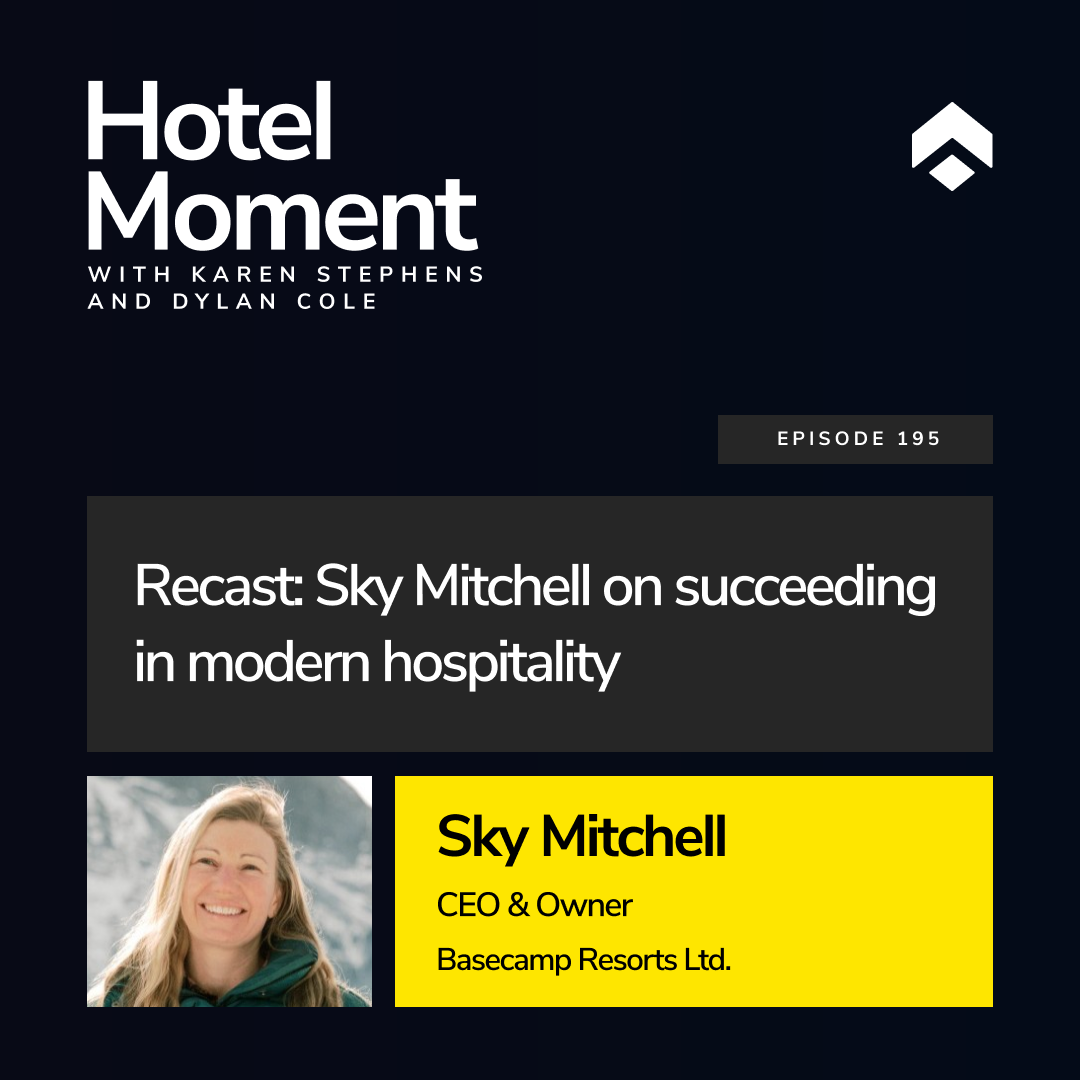
Episode 195
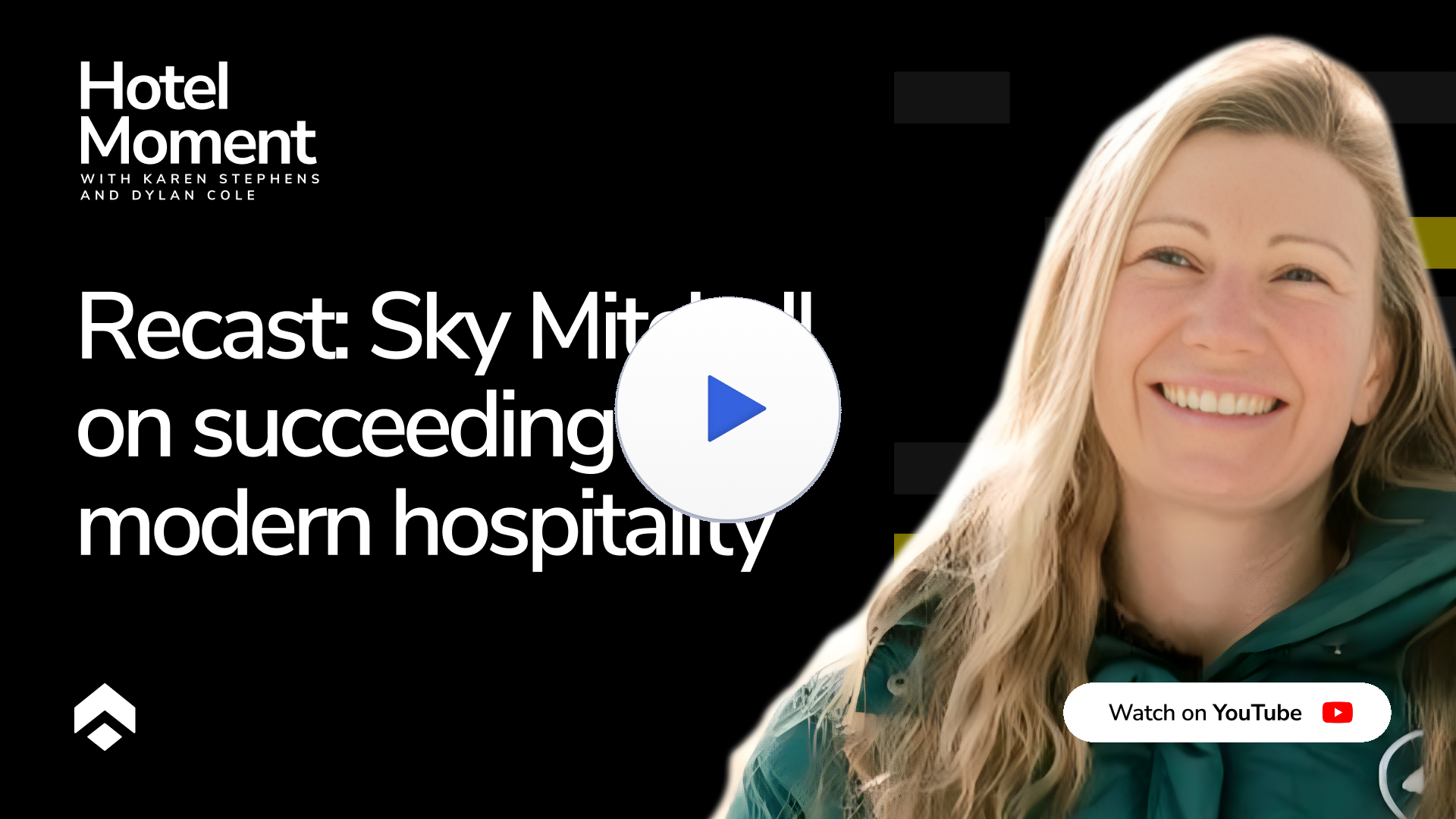
Recast: Sky Mitchell on succeeding in modern hospitality
Sometimes the biggest career setback becomes the opportunity that changes everything.
In this episode of Hotel Moment, Karen Stephens sits down with Sky Mitchell, Founder and CEO of Basecamp Resorts, to talk about the unexpected journey that took her from getting fired after 27 days to building a $600 million hospitality enterprise.
Sky shares how a $38,000 BMW financing deal helped her buy the land that became the first Basecamp property, how she raised capital while living in a construction trailer, and why her approach to building a team is simple: Hire people smarter than you.
She also gets into the evolution of Basecamp, including the development of Everwild Nordic spas, and how sustainability is woven into everything from land acquisition to construction and guest amenities.
It’s a candid look at entrepreneurship in hospitality, and a reminder that there may never be a perfect time to start. As Sky puts it, “There’s no right time, so just do it.”
Media
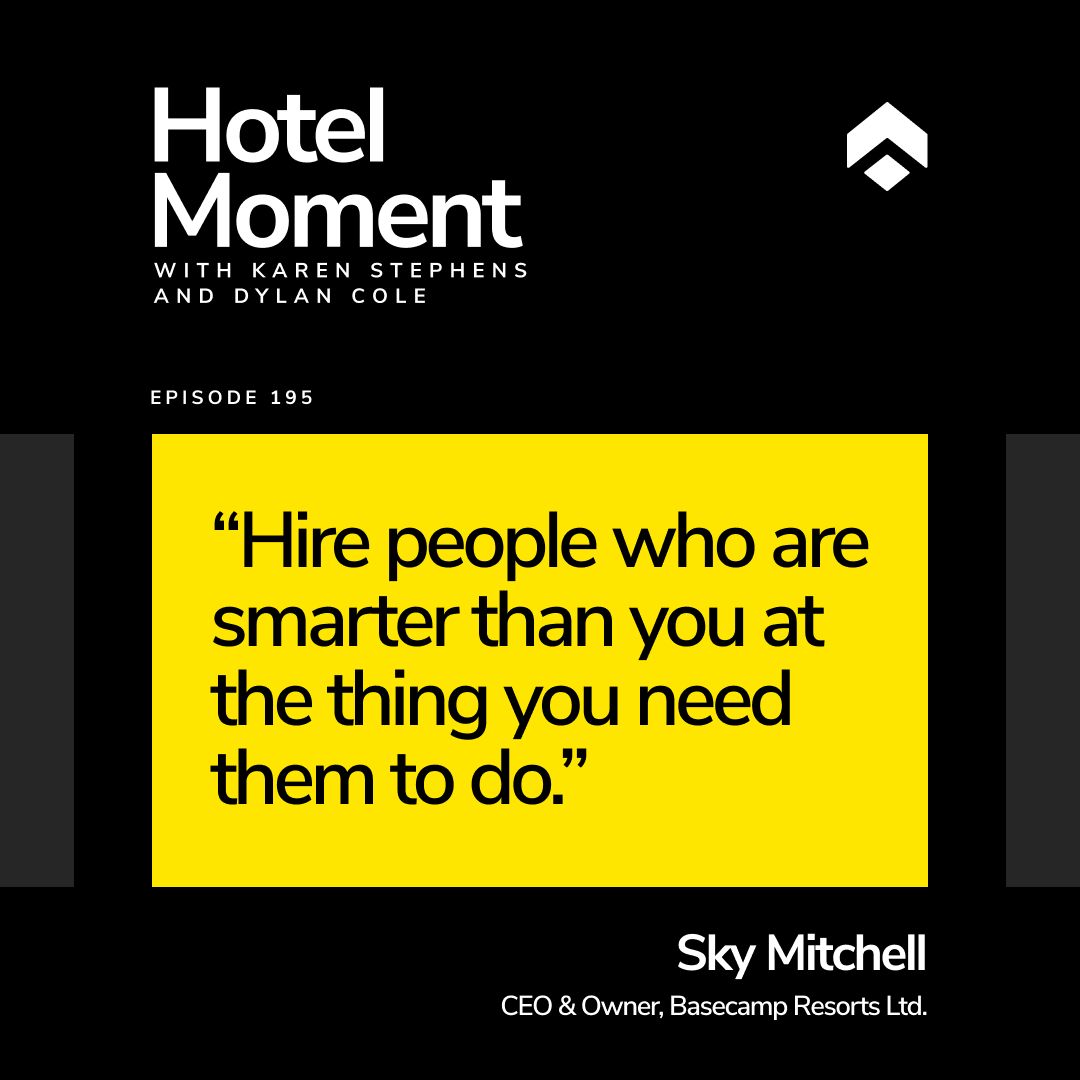
The people you hire are key to your success
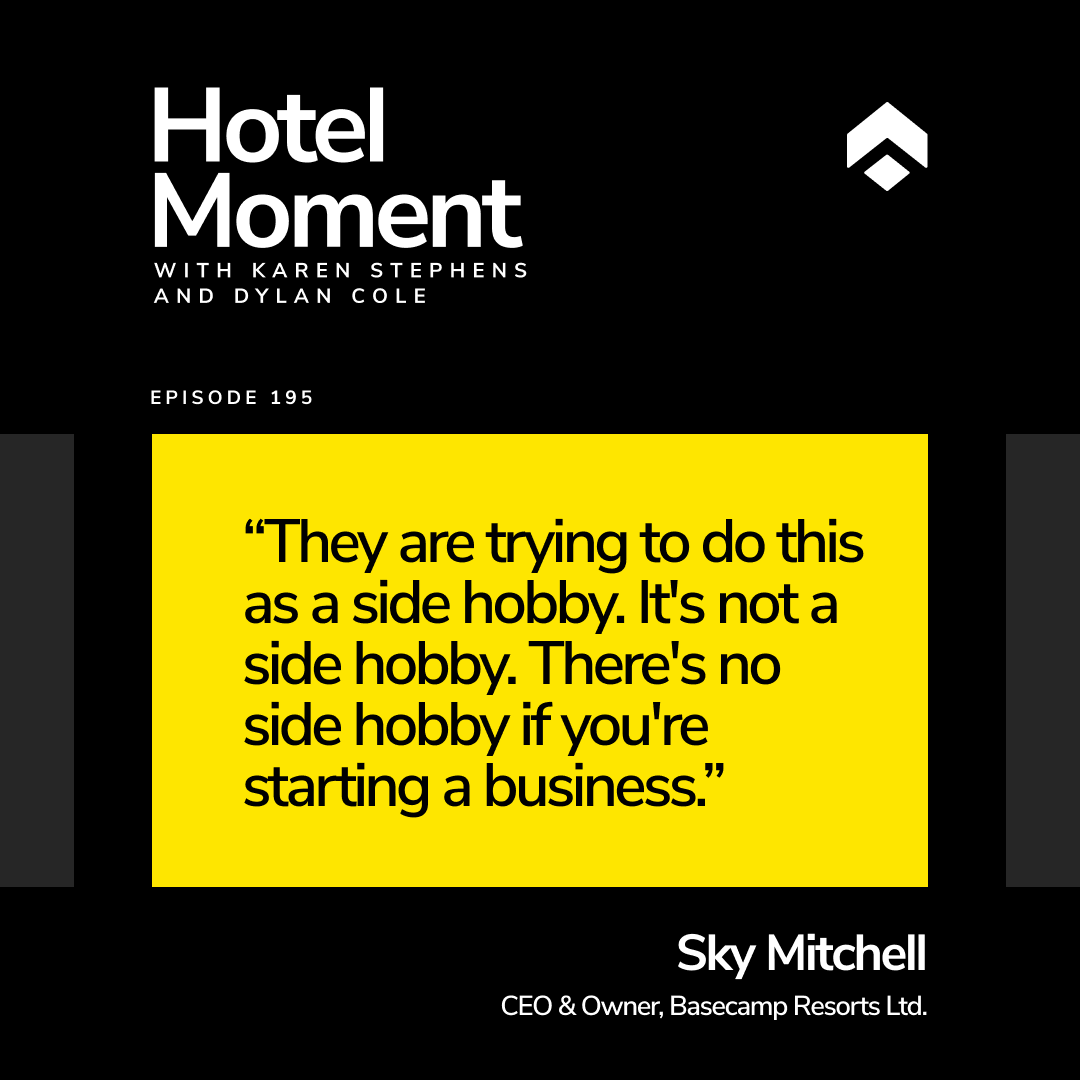
Take your business seriously
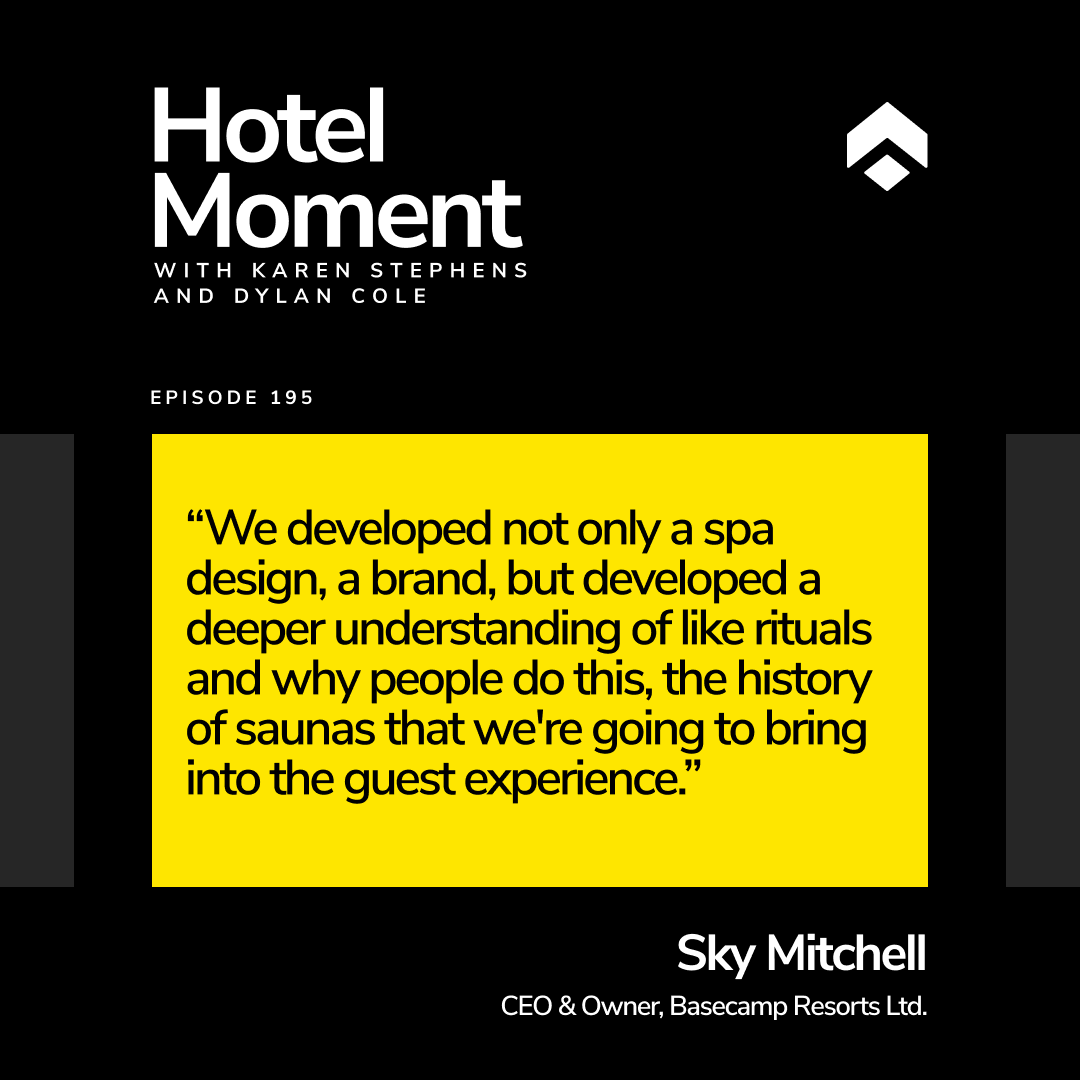
Take hospitality as seriously as your guests do
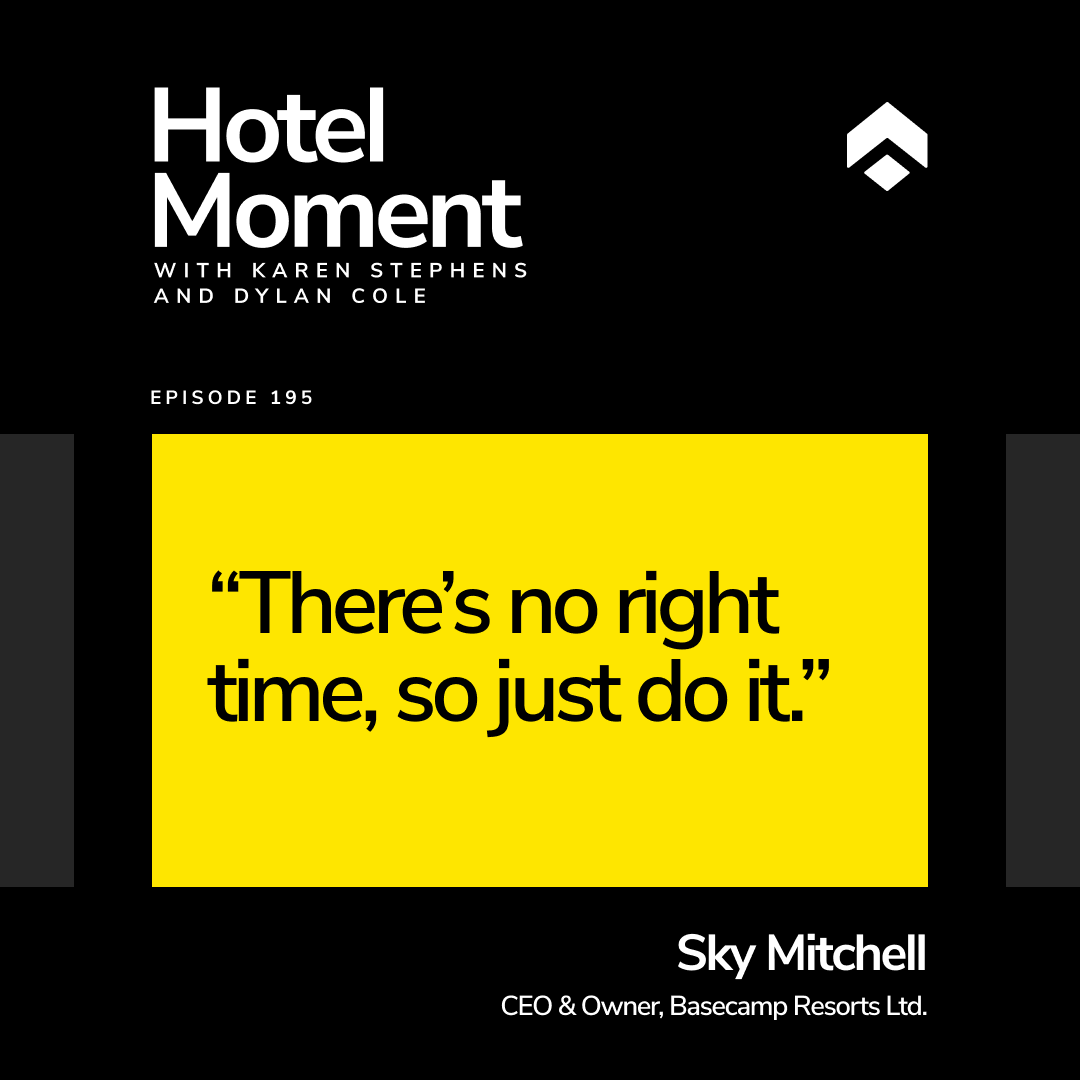
When’s the right time to chase your dreams?
Meet your host
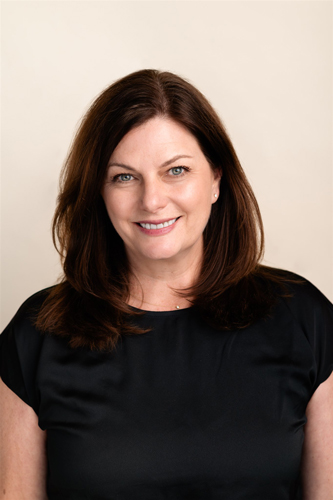
Karen Stephens
As Chief Marketing Officer at Revinate, Karen is focused on driving long-term growth by building Revinate’s brand equity, product marketing, and customer acquisition strategies. Her deep connections with hospitality industry leaders play a key role in crafting strategic partnerships. Karen has more than 25 years of expertise in global hospitality technology and online distribution — including managing global accounts in travel and hospitality organizations such as Travelocity and lastminute.com
As the host of The Hotel Moment podcast, she interviews top players in the hospitality industry. Karen has been with Revinate for over 11 years, leading our global GTM teams. Her most recent transition was from Chief Revenue Officer, where she led the team in their highest booking quarter to date in Q4 2023.
Watch the video
Transcript
[00:00:00] Sky Mitchell: $75,000 car, finance 100% of it at 1.9%, which is like, in my mind, free money. And, “We’ll give you a car loan for $75,000. This new car, we take back the old car. And in light of all that…” I end up with a check for $38,000 from Bimmer. And I’m like, done, sold, give me the loan, I’ll take the check. I’ll take this car I can’t afford with a thousand bucks a month payments, and I’m gonna take that check and buy a piece of dirt in Canmore, which is the land where the first Basecamp Resorts now sits.
[00:00:32] Karen Stephens: Welcome to the Hotel Moment Podcast presented by Revinate. I’m Karen Stephens, Chief Marketing Officer, joining you from sunny San Francisco, California.
[00:00:40] Dylan Cole: And I’m Dylan Cole, Managing Director of Revinate Europe, calling in from Amsterdam.
[00:00:45] Karen Stephens: This is the podcast where we explore how technology shapes every moment of the hotelier’s experience and, more importantly, how the right technology delivers real outcomes for hotel teams and guests alike.
[00:00:56] Dylan Cole: From revenue strategy and guest communication to operations and marketing, we sit down with the people transforming hospitality around the world.
[00:01:04] Karen Stephens: Depending on the conversation, sometimes it’ll just be me behind the mic.
[00:01:09] Dylan Cole: Sometimes it’ll be me, bringing a European perspective and stories from across the global hospitality industry.
[00:01:15] Karen Stephens: Whether you’re a hotelier, a tech enthusiast, or just curious about where hospitality is headed.
[00:01:21] Dylan Cole: You’re in the right place. Let’s get into it.
[00:01:25] Karen Stephens: Hello and welcome to the Hotel Moment Podcast. I am your host, Karen Stephens, the Chief Marketing Officer of Revinate. And today we are thrilled to have Sky, the founder and CEO of Basecamp Resorts. Sky has built a remarkable hospitality brand that has redefined the mountain experience for travelers in Western Canada. With a passion for the outdoors and a commitment to offering unique, homelike comfort combined with hotel convenience, Basecamp has become a key player in the region’s hospitality scene. We’re excited to dive into her journey, her innovative approach to hospitality, and how she’s shaping the future of Basecamp Resorts. So I have to say that this conversation with Sky lit me up like a Christmas tree. And what do I mean by that? I think it will become obvious the minute that you hear her tell her founder story and how she approaches business and life for that matter, that she’s really someone who is an entrepreneur at heart, very, very brave, and not afraid to take chances, and the chances have really panned out. So I hope you enjoy. I give you Sky. Welcome to the podcast, Sky. It’s great to have you here.
[00:02:30] Sky Mitchell: Thank you so much for having me.
[00:02:32] Karen Stephens: So full disclosure for our audience, this is actually the second time that Sky and I have gotten to talk, and I have to say I am so excited that we get a re-record because the first time I just was so lit up by our conversation. So I’m so excited for our audience to be able to hear a little bit about your story.
[00:02:48] Sky Mitchell: Well, thank you. And I’m excited to be doing this again in better Wi-Fi. So thank you for re-having me.
[00:02:54] Karen Stephens: Absolutely. So Sky, let’s start by just talking a little bit about Basecamp. So can you just give the high level of what your company is and where it’s located?
[00:03:03] Sky Mitchell: Yeah, you bet. We’re a real estate developer located in Canmore, Alberta, which is about 20 minutes from Banff, and we build all kinds of different developments from industrial to residential to hotel condo, but we’re most notably known for our hotel products, which are a variety of different brands that fall under the Basecamp umbrella. And those are anything from Lamphouse, which are motel conversions, to Northwinds, which are entry-level hotels, all the way up to Mountain House with our Everwild Spa, and that’s our higher-end offering. And Basecamp Resorts is our home-away-from-home kind of full kitchens, multiple bedrooms, that kind of scenario. So we have a variety of different offerings under our brand.
[00:03:41] Karen Stephens: Yeah, that’s great. And I definitely want to come on to the spa, so that’s something that I found really exciting, so we definitely want to hit on that. But before we go there, can you just give our listeners the origin story? For a little context, it’s a little crazy right now in the world, and the bravery here was something that really captivated me. So please tell us how you got started.
[00:04:03] Sky Mitchell: Yeah, and hopefully this story helps people to realize like there’s always something. So it’s interesting as humans how we forget, which is why we have multiple children, you forget childbirth. Like you forget that it’s always hard and it just sort of keeps changing. So with that, I got fired from my job after 27 days. I had a multitude of different jobs after getting an MBA in real estate development, and the third job that I got was like the job. I was so excited. I had an office, I had a team, all the things you’d want as a manager of multifamily developments for a real estate developer. And then they turfed me. Like no questions, no explanation, nothing. And I got walked out of that office with one of those brown boxes, and see ya later. The HR director walked me to my van and I was mortified. Like, I can’t believe this is happening. I am like so embarrassed. And I went home that day and I was like, absolutely never on the face of this earth am I going to work for someone again, like F that. So anyway, while I had a job and had an income and could get a mortgage, I bought three things: two condos that were hotel condos, meaning that you can rent them out on Airbnb legally—it’s all the way Airbnb should be, which are commercial condos—and a BMW, a little two-door, super sexy black car that I didn’t actually have the day I got fired. I can’t remember why. But nonetheless, I bought the car for $38,000, and I was like, I don’t need this car anymore. I had needed it for this like supposed fancy job I had at this like nice company doing this nice thing. But anyway, drove back to Bimmer and said, “Can I get a refund? There’s only like 500 kilometers on the car. I don’t need it.” And they’re like, “This isn’t Walmart or Costco. We don’t do like unconditional refunds, you moron, but we have a proposition for you. Why don’t you buy this $75,000 car, finance 100% of it at 1.9%, which is like, in my mind, free money, and we’ll give you a car loan for $75,000. This new car, we take back the old car, and in light of all that…” I end up with a check for $38,000 from Bimmer. And I’m like, done, sold, give me the loan, I’ll take the check. I’ll take this car I can’t afford with a thousand bucks a month payments, and I’m gonna take that check and buy a piece of dirt in Canmore, which is the land where the first Basecamp Resorts now sits. And that was an $8 million project, and now we’ve completed around $600 million worth of real estate developments.
[00:06:24] Karen Stephens: Wow, incredible. And I remember when we had chatted before, you ended up raising a fair amount of money to get your first seed product from your friends and family.
[00:06:32] Sky Mitchell: Exactly. So $38,000 didn’t cut it, obviously. That was just my contribution. And then I had no more money. I had no job. I had two mortgages on those hotel condos that I was luckily servicing by renting them on Airbnb. And Tim and I, my boyfriend and now husband, were staying in the camping trailer on the building site and at a house that we had in Calgary that we were doing a project at and flipping and selling, and that was a bit of a Calgary thing. But no more money. So I was like, “Well, what do I do? I need $2 million of cash to be able to get a loan to be able to build this hotel.” So I phoned everyone I knew. Like everyone. “Hey, remember me? We’re gonna build a hotel in Canmore and it’s incredible.” Like it took months and months of hard work, and all the while I’m putting together this project and Tim started working on the project. He was a carpenter, and I was like, “So how do you feel about building a hotel?” And he’s like, “Okay.” And I think back to that a lot. Like, I could have been dating someone who was, “Don’t take on that risk. You’re crazy. Why would you do that? Blah blah blah blah blah blah.” And I was really lucky that he was like, “Sure.” So he started building the hotel. I ran around raising money and putting together the drawings and coordinating consultants and doing all that and, yeah, it was crazy.
[00:07:38] Karen Stephens: And here you are. So 2016, you’ve built this whole enterprise or empire now, I will say. So let me know, now as the CEO of this company, how do you think about staffing? Because obviously there’s a lot, you know, you have a background in MBA and real estate development, you kind of had the bravery to put this all together. So how do you think about, as a founder, being able to put together a team to now get into the space that you’re in?
[00:08:02] Sky Mitchell: It was like the first thing that I ever needed to do. So I hired two people at the same time. The first person was operations manager and an accountant because I knew I have no idea how to run a hotel. Like, I’ve never run — I ran two Airbnbs, that doesn’t make me a hotelier. And I don’t understand anything about QuickBooks and reconciliations, and I’m not an accountant. Just ’cause people get an MBA doesn’t mean that they’re good at QuickBooks and accounting. So I hired Teresa as the accountant, and I was like, “The key in this whole thing is hire people who are smarter than you at the thing you need them to do, and they’ll do it right.” So that was always my philosophy, and since those two people, we now have 300 people. And it’s always about putting the right people in the right seats, and so matching their skillset, their desire, with something that we need, which is our desire, and that usually tends to work. It’s not perfect. There’s always something. There’s a reason for an HR division at every big company. But nonetheless, we get through and we really believe in treating our people the way I would want to be treated. So that’s really important.
[00:08:59] Karen Stephens: I love that. So let’s talk a little bit more about the brands. So you mentioned Wildwood, which is your spa brand. It’s not only a spa, it’s a Nordic spa. So can you tell our listeners what that is?
[00:09:10] Sky Mitchell: Well, since we last chatted, it’s evolved, and it’s now Everwild for two reasons. A, I like Everwild better. It feels like it’s ever wild, and I’m kind of an Everwild soul. But the true catalyst to this, which is a very good business lesson that your listeners hopefully enjoy, is that the name wasn’t available for trademark purposes in the United States. So we’re gonna be growing from Canada to the United States. So if you’re ever starting a business, listener, it’s like check the name, check the name again, get a lawyer, it’s worth the money to check what you’re trying to start because if the name’s not available and you start going, the person who actually has the trademark or who is operating under that name, which you may not find on Google, could shut you down. So, anyway. Long story short, we’re very anal about checking our names all over the place that we want to. Wildwood wasn’t available, someone owns that, and so we were like, “Well, Everwild.” And I really like it. I thought of it myself, which I rarely think of the names, so I was quite excited that it stuck. And long-winded story, that’s the name of the Nordic spa. So for people who haven’t experienced a Nordic spa, it’s a beautiful thing. It’s based on the thermal cycle of hot, cold, rest, repeat: hot being a series of whether it’s hot tubs, steam room, sauna; cold typically being a cold plunge or walking around if it’s minus 10 outside; rest, there’s indoor rest areas, you don’t sit outside, but for summer months, there are beautiful outdoor fire pits where you can sit and rest outside, and then you do it again. And there’s like a huge history to this, massive wellness benefits, health benefits, all kinds of stuff we could go on for hours. But the gist of it is it’s a really awesome social experience that’s really good for you.
[00:10:40] Karen Stephens: Yeah, that sounds amazing. And the first one is gonna be in Canmore, right, at one of your hotels there?
[00:10:47] Sky Mitchell: Yeah, so the first one’s actually under construction, Everwild at Mountain House. And originally we were like, “Oh, let’s expand the hotel. We’ve got an acre and a half of extra land that when we bought the Holiday Inn and converted it to Mountain House, we’ll just use some more units for hoteliers.” That’s like a natural thing. And I had been to one or two Nordic spas at the time and was like, “These are kinda neat, you know.” And I’m not very spiritual and very like anything like that — which I want to be more of — but anyway, I was like, it’s such a great experience, I want to go and build a Nordic spa on this site. And then we just went from there. And since that moment, which was a few years ago, we’ve developed not only a spa design, a brand, and all that, but developed a deeper understanding of rituals and why people do this and what’s the history of saunas and all this stuff that we’re gonna bring into the guest experience. And since then, we’ve now expanded and we’re doing four or five other spas.
[00:11:39] Karen Stephens: That’s so cool. And so do you have concierge, right? Do you have somebody taking the guests through the experience so, you know, you’re not just rocking up and like, “Oh, I’m gonna just sauna, spa, whatever,” or do you have a guided experience for those? Is that the plan?
[00:11:50] Sky Mitchell: No, it’s not guided in the sense that the person’s with you the whole time because it’s not this giant place. Like, it’s very self-guided, but there is someone there to make recommendations. So when you check in, if you’ve never done this before and you have no idea — how many minutes should I go into the sauna, how many minutes should I do a cold plunge — you know, there’s no rule. It’s do whatever you want. But this is the recommended kind of approach to have the best experience. And there’s some people who are very specific, like the water in the cold plunge must be 1°C, you must go in for two minutes, and people have little timers at some of these experiences. So it’s very personal, but we would make suggestions based on the person, but it’s ultimately up to them. So it’s not particularly guided, but we’ll have a lot of information so people can make their own decisions for their own body.
[00:12:33] Karen Stephens: Right. Which makes sense. That sounds amazing. So you mentioned you’re planning on expanding to the US. So what are the plans? Do you have a location picked out and timing, or is that still something in the planning arena?
[00:12:45] Sky Mitchell: That’s very much in the planning. So right now we have a spa under construction in Canmore, one under construction in Fernie, which is a ski town in British Columbia, one that’s starting construction in the spring of next year of 2026 in Calgary. We’re looking at different options outside of Toronto and Montreal. And then in the States, we’ve just started conversations with a few developers in a variety of different locations. So it’s really preliminary, but basically our locations are typically one of two things: like, a tourism destination such as a Canmore, Banff, or different areas like that, or just outside of a large urban area. So in Calgary, we’re about 20 minutes from downtown, and Calgary is a city of 1.8 million people if you include the surrounding areas. So we have to either have A, the population base, or B, a location that people are already going to, right, like a Banff, like a ski resort.
[00:13:34] Karen Stephens: And everybody needs to de-stress. So I love the idea of it right outside. Now let’s talk a little bit about sustainability. So you’re doing all of these buildings, but I know you’re from Canada originally, you live in the mountains. So can you talk to me a little bit about your philosophy around sustainability when you do these projects? How do you approach it?
[00:13:52] Sky Mitchell: Yeah, absolutely. I think there’s a few different avenues in which we think about it. So if you go from land acquisition as a starting point, we obviously end up having to change the dirt, tear down trees, do things that aren’t, let’s say, ideal for the landscape, but we always endeavor to replace what we’ve, say, taken out, if not more. So in the case of this spa here, there’s actually gonna be a lot more trees than we took out, and it’s gonna, you know, from an aesthetic purpose, look beautiful and be really great. We use materials during our construction that are as recycled and sustainable as possible, and that I would defer to the construction experts on exactly what that means. And there’s different elements of tiles, and you can get tiles that are less harmful in their production cycle. So it’s not just like what is in the tile itself, but it’s like how was it produced, what is put into the environment during production for everything. I’m using tiles as an example, but for every building material, you can be sustainable. We’ve built a couple of buildings that are called Built Green, which is actually a certification you get by a third party confirming that you’ve actually done all these different things. It’s quite an exhaustive list of things to become certified. So that’s something we’ve done at some of our buildings. It’s not the case at a renovation, obviously, because the building was built a long time ago, but in a new build, that’s possible. And then it’s important for us as we’re operating our business, you know, what shampoos are we offering guests? What are we gonna offer guests? What robes are we gonna buy? So we think about it from every perspective. And we are part of a tree-planting initiative right now. We’re part of Protect Our Winters. We, you know, are part of all kinds of different things that we’re really trying to grow on that as well.
[00:15:31] Karen Stephens: Yeah, I love that. I know myself, I’m also—I love mountain towns, I love to ski, I love to be in resorts, and it’s important to me as a consumer that I’m staying in a place—if I’m communing with nature, I wanna make sure that I’m in a spot that believes that, too.
[00:15:44] Sky Mitchell: Yeah, totally. We believe it and we do the best we can. Obviously, nothing is perfect, but we’re trying.
[00:15:50] Karen Stephens: We’re trying, absolutely. So for our listeners out there that are owners, asset managers, do you look for investments into your endeavors? Do you also raise capital now for some of your projects?
[00:16:01] Sky Mitchell: Absolutely. So it’s no different than the beginning. We raise capital from—I don’t want to say just about anybody because we’re not those people who are taking like two thousand dollar checks here and there. We have a minimum investment of fifty thousand dollars. We raise money, sorry, into our projects through limited partnerships, which in the States may be a limited partnership, may end up being an LLC, but no different. And people who come in are accredited investors. So you have to have a certain income or net worth to be considered an accredited investor. It’s a little bit different in Canada and the States, but not much. And we really pride ourselves in this retail investment model. Not that I have anything against institutional partners, and we would be open to that if that door opened for us and it was a good idea, but we’ve raised our money fifty grand here, two hundred grand there, five hundred grand there, and I love having hundreds of investors. I love making people money. I love growing our business with that kind of following. It’s really fun. So always raising money. So anyone who wants more information, definitely find us.
[00:16:59] Karen Stephens: Yeah, so where would they find more information if they wanted it, while we’re on the topic?
[00:17:02] Sky Mitchell: We have a multitude of websites, but anyone listening, just email me. It’s very easy: sky@basecampresorts.com, and I’ll send them to the appropriate person. We have an exempt market dealer who does all of our compliance stuff, and bit of a process, but email me and I’ll sort it out.
[00:17:19] Karen Stephens: What a cool opportunity. I mean, like, if I have the opportunity to invest in a business like yours that’s run by somebody like you, I’m in.
[00:17:25] Sky Mitchell: Oh, thank you. Well, email me. Send us a check tomorrow.
[00:17:29] Karen Stephens: Send me a check. You got it. So what is the one piece of advice, Sky, that you would give to other entrepreneurs in hospitality or any other industry when you talk about starting from scratch? And I mean, your story is so unique, I don’t know that everybody can go out there and replicate it, but if you had one piece of advice to give, what would it be?
[00:17:46] Sky Mitchell: Yeah, I don’t know if I recommend financing your car to start a business. That’s not exactly sound business advice. However, what I would say is there’s no right time. So just do it. Like there’s no, you know, yesterday I got a dog. Like, who goes and gets a dog when you have a million things going on and two little kids and all the rest of it? But it was just like there’s never gonna be a moment in business where the clouds open up and the stars are shining bright and now’s your time. Like, there’s no right time to have a kid. There’s no right time to do anything. You just have to do it. And a lot of people come to me with this question and think that they have to have this like perfect step-by-step plan with every single step, and T’s crossed and I’s dotted. And, yes, it is good to have a plan, but sometimes you just have to take the leap and know in your soul and your heart that you’re going to make it work out, that you have that perseverance. And if someone doesn’t have that perseverance or is too scared, they should just get a job. And that’s okay. It’s okay to not be an entrepreneur. Like, trust me, this is stressful. It’s okay to get a job. It’s actually great. It’s a good thing. And because it’s not worth the stress, like if someone’s an entrepreneur, they know it. You just know. It’s like the sky is blue. You just know in your soul. And if that’s not you, don’t do it. Right.
[00:18:52] Karen Stephens: But be brave. I love that. There’s no right time.
[00:18:54] Sky Mitchell: But if you’re gonna do it, you can’t look back. There’s no right time—jump off the cliff, literally, and figure—not like literally off the actual cliff, but off the cliff of entrepreneurialism. Like, it is a cliff. You jump off and you don’t have a job and you don’t have an income, and you can’t do it half-assed. Like, I rarely watch Shark Tank and Dragons’ Den, but when I do, they always say, “Don’t do this as a side hobby.” And that’s like golden every single time there’s someone up there trying to do this as a side hobby. It’s not a side hobby. There’s no side hobby if you’re starting a business. You’re either in or you’re out. You’re in or you’re out. And if a dream is a side hobby, it’s a hobby. It’s not a business.
[00:19:25] Karen Stephens: Thank you, Sky. This is always a pleasure to talk to you. The URL is basecampresorts.com. And Sky, thank you so much. Really appreciate it.
[00:19:34] Sky Mitchell: Thank you so much for having me.
[00:19:39] Karen Stephens: Thank you for joining us on this episode of Hotel Moment by Revinate. Our community of hoteliers is growing every week, and each guest we speak to is tackling industry challenges with the innovation and flexibility that our industry demands. If you enjoyed today’s episode, don’t forget to subscribe, rate, and leave a review. And if you’re listening on YouTube, please like the video and subscribe for more content. For more information, head to revinate.com/hotelmomentpodcast. Until next time, keep innovating.
Episodes
Hotel Moment
WITH KAREN STEPHENS
Subscribe for updates on your favorite platform