Hotel Moment
WITH KAREN STEPHENS


Episode 178
2026 Hospitality Benchmark Report: The voice channel playbook | a Revinate webinar
Are your calls converting or slipping through the cracks?
High-intent callers aren’t just inquiries, they’re some of your most valuable revenue opportunities. But without the right strategy, visibility, and follow-up, too many of those conversations never turn into bookings.
In this episode of Hotel Moment, we’re featuring a webinar from our 2026 Hospitality Benchmark Report leadership series with Bailey Yeats (Revinate) and Amanda Wasco Brown (Old Edwards Hospitality Group) — breaking down how to turn your voice channel into a revenue engine. From optimizing conversion rates to uncovering missed opportunities in lost calls, the most effective teams are using voice data to drive smarter decisions and stronger results.
Stop treating calls like routine tasks. They’re rich with guest intent, insights, and revenue potential. The hotels winning in 2026 are the ones capturing that data, empowering their agents, and turning every conversation into an opportunity.
Listen now to start turning calls into conversions.
Media
The best calls are personalized
Not all action is profitable
The ultimate goal
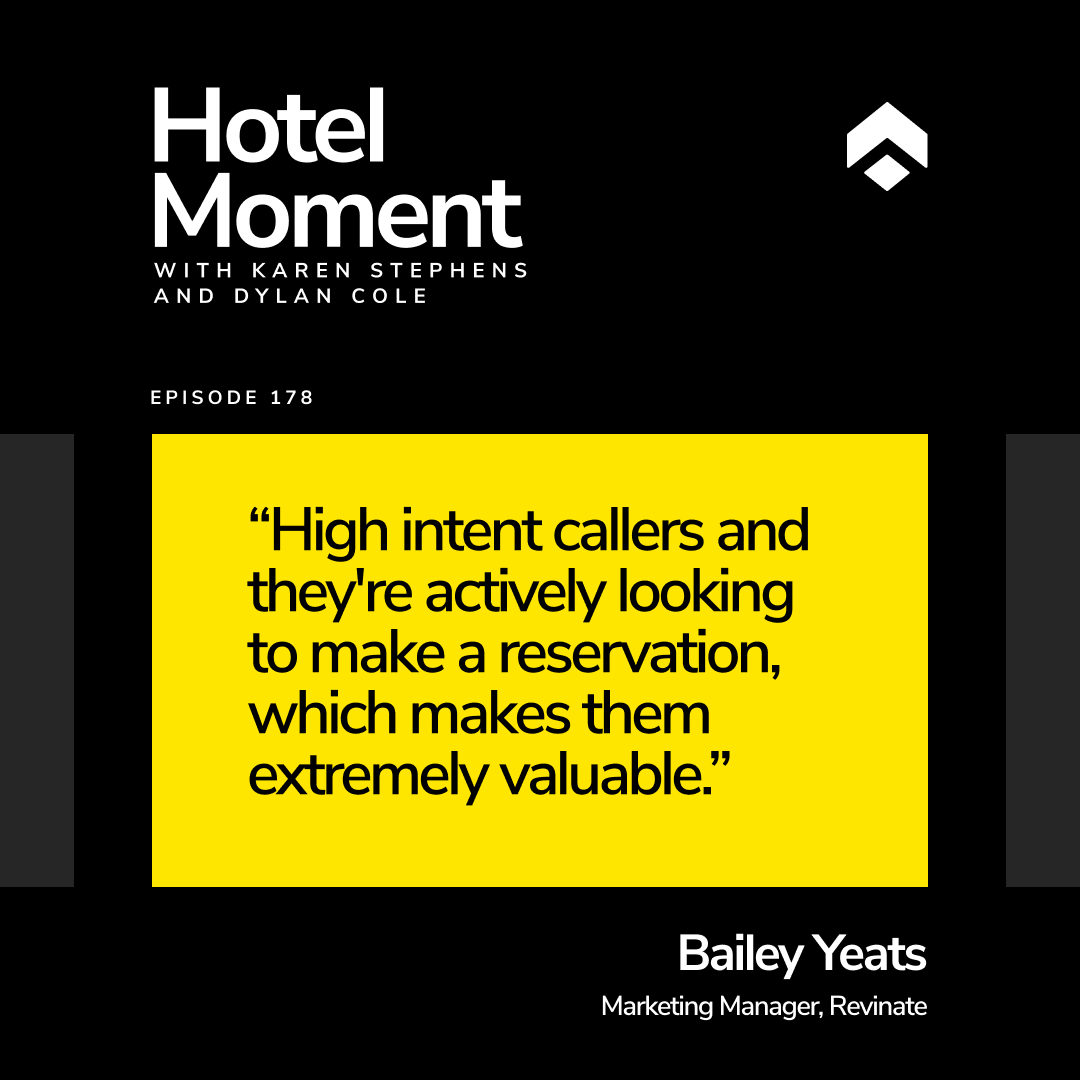
Target high intention

Meet your host
Karen Stephens
As Chief Marketing Officer at Revinate, Karen is focused on driving long-term growth by building Revinate’s brand equity, product marketing, and customer acquisition strategies. Her deep connections with hospitality industry leaders play a key role in crafting strategic partnerships. Karen has more than 25 years of expertise in global hospitality technology and online distribution — including managing global accounts in travel and hospitality organizations such as Travelocity and lastminute.com
As the host of The Hotel Moment podcast, she interviews top players in the hospitality industry. Karen has been with Revinate for over 11 years, leading our global GTM teams. Her most recent transition was from Chief Revenue Officer, where she led the team in their highest booking quarter to date in Q4 2023.
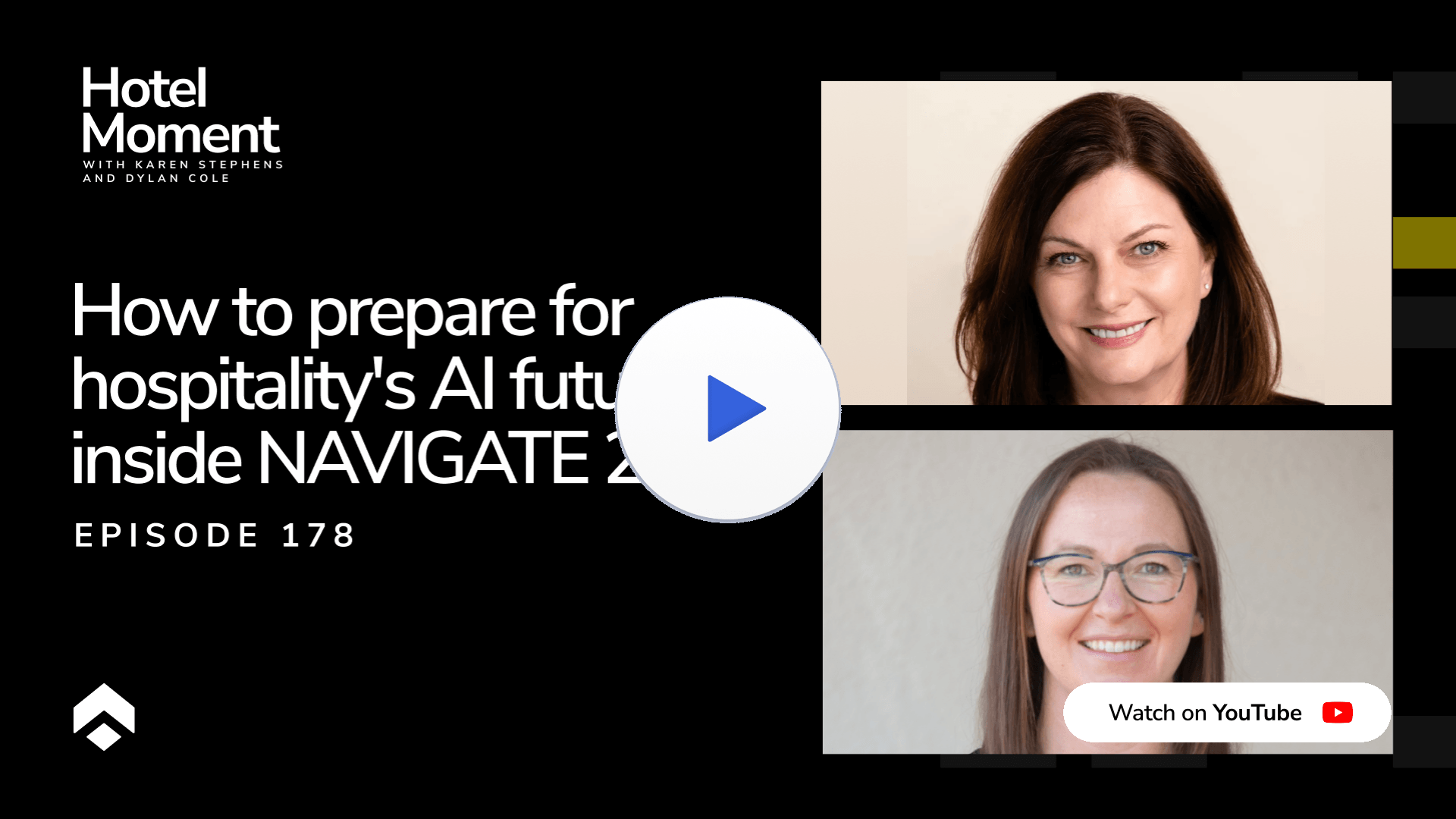
Watch the video
Transcript
[00:00:00] Bailey Yeats: Something that I love to highlight when we talk to agents is the importance of their job, right? They are the foundational piece to everything guest data. They’re the ones who ultimately enter in that first data piece for that guest. They’re like the foundation of the house. And the rest of the team builds on top of that house.
[00:00:23] Intro: Welcome to the Hotel Moment Podcast, presented by Revinate, the podcast where we discuss how hotel technology shapes every moment of the hotelier’s experience. Tune in as we explore the cutting-edge technology transforming the hospitality industry and hear from experts and visionaries shaping the future of guest experiences. Whether you’re a hotelier or a tech enthusiast, you’re in the right place. Let’s dive in and discover how we can elevate the art of hospitality together.
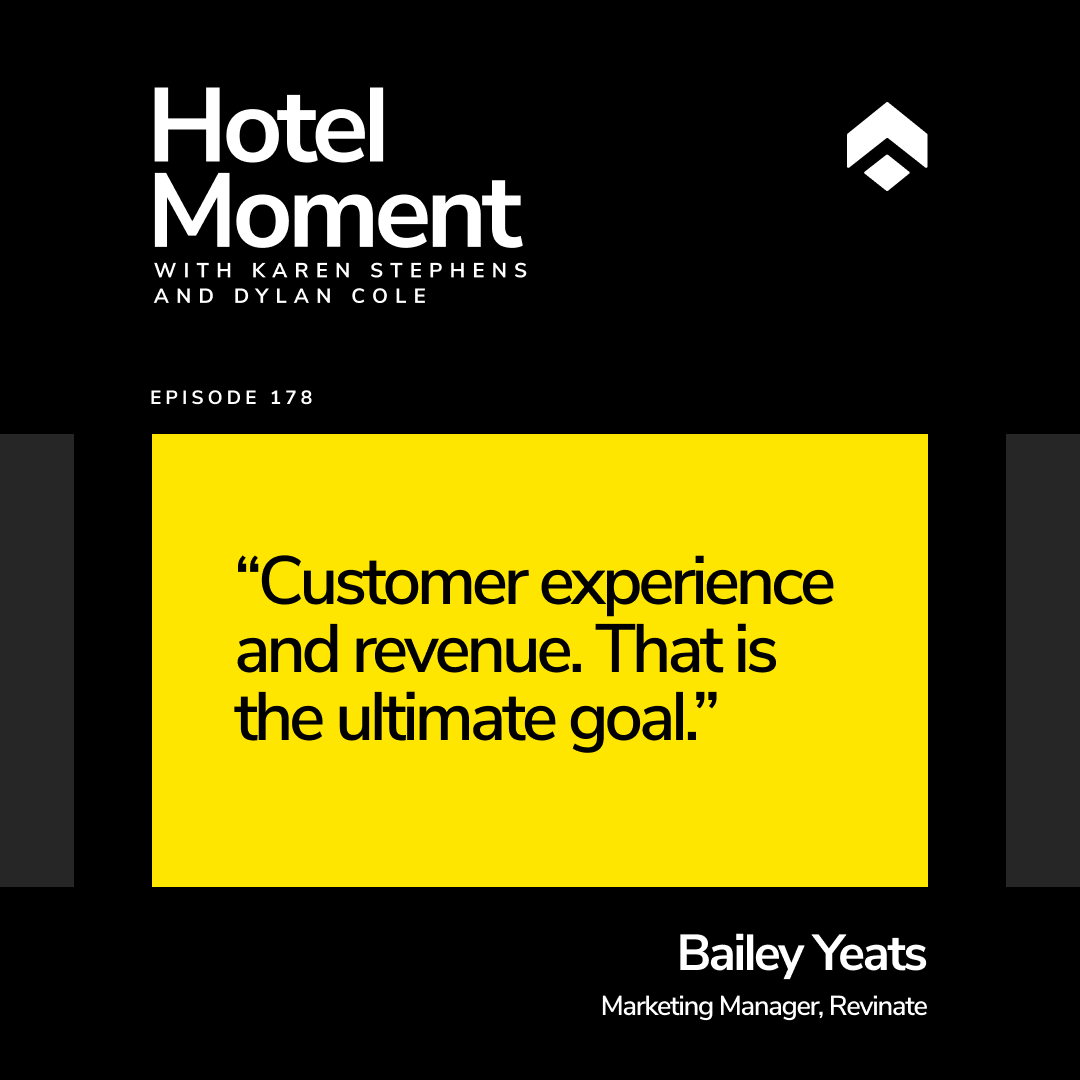
[00:00:52] Bailey Yeats: Today we are finishing up this beautiful webinar series that we have been hosting for the 2026 Hospitality Benchmark Report Leadership Series. This is three of three. If you missed two or one, you’re always welcome to go back and check those out. And I’ll provide you some information on how to do that. However, today we are really excited to be talking about the Voice Channel. And this is the Voice Channel Playbook for 2026. Specifically, you know, we’re going to be uncovering some voice metrics that you should be tracking if you’re not already tracking them, and then offer you strategies on how to improve them so that 2026 can be even better than 2025. My name is Bailey Yeats, and I am a marketing manager here at Revinate. And joining me today is our voice channel industry leader, Amanda Wasco Brown. Amanda is the director of revenue at Old Edwards Hospitality Group. Amanda, I’m so excited that you have joined me today to talk all things voice. So thank you so much. It’s really clear that you are a leader. Your team is leading the way and creating these amazing customer experiences and not only doing that, but driving revenue while you do it. So that is the ultimate goal, right? Customer experience and revenue. What a great package. So I look forward to hearing the insights that you share today. Thank you so much and welcome. On the agenda today, we have my introduction. And then we’re going to get into that hospitality benchmark for 2026. We’re going to talk about the voice metrics that matter as well as strategies to actually improve these metrics. So, Amanda, please tell us a little bit about Old Edwards Hospitality Group and about yourself.
[00:02:30] Amanda Wasco Brown: Hi everyone. Like Bailey said, I’m Amanda Wasco Brown. I’ve been with the Old Edwards Hospitality Group going on 14 years, in a bunch of different roles, most recently as the director of revenue, but I’ve been with the reservations department for about eight years now. Old Edwards Hospitality Group is a luxury independent hospitality group. We started out in Highlands, North Carolina, and as of today, we have expanded into Athens, Georgia. We just acquired the Ribbid House property, which is a beautiful hotel about 10 minutes from UGA. So now we have four hotels, we property manage some stuff, we have three different golf courses and communities, a ton of different dining venues and event venues. Pretty beautiful place to work and live.
[00:03:10] Bailey Yeats: It is such a remarkable place and congratulations on your new property. That’s so exciting. What an exciting event for all of you. And I have to say I was fortunate enough to come visit this property — or a couple of your properties — and do some training there with the team. And it’s just such a remarkable area, so peaceful and so calm and just the ultimate place for relaxation and the customer experience was exceptional. So very exciting to have you here. Now, with all of that said, you know, this is our hospitality benchmark report. What this report is — uh, something that is actually going to provide anyone who’s managing revenue, they’re managing guest experience, or any sort of digital performance — it’s going to provide them with this mission-critical intelligence. It’s letting them know exactly the metrics that they need to be meeting or exceeding. And so for 11 years, Revinate’s been publishing this report to help hoteliers benchmark performance, looking for those revenue opportunities, make strategic decisions, and it’s really based on actual behavior and not just on a generic survey. So this is actually our most comprehensive edition yet. And what I mean by that are these numbers right here. So this year we analyzed a ton of data: 2.8 billion emails, 4.3 million phone calls, 28 million guest reviews, and 22 million text messages in 2025, globally. That is a lot of data. And what that did was it gave us industry-leading insights on communications, database quality, engagement rates, revenue per contact — all things voice, email, guest — everything you can imagine. And so as we cover all of these channels, you know, you’re going to have different data considerations from many different channels. And that is the ultimate goal — is to have that well-rounded idea and picture of what’s happening with your property. Now, why modern hoteliers have told us that they love this benchmark report is really because if you’ve worked in the hospitality industry, you understand that being busy doesn’t mean being profitable necessarily. You can have all the checklists you want and be checking those things off, but it doesn’t necessarily mean that you’re winning in the industry. And so finding this kind of report that gives you facts — they’re really cold, hard facts — and data to support what you need. From defining good and excellent. So we can be good or we can be excellent. And this report helps give you those data-driven goals. It also identifies the invisible revenue leaks that exist within our industry, right? We know of those leaks in email marketing, in the voice channel. It really does shine a light on where those leaks are exposed. The foundational piece of it all is the data. So it’s important to know whether your data is growing or stagnating because you might be losing that race for guest ownership. So understanding all of these metrics, it really ultimately helps you overall with your true pulse on your hotel’s success. So as you follow along, viewers today, we encourage you to scan the QR code or head over to our website and get access to the Hospitality Benchmark Report for 2026. And so you can follow along with your property and see where you lie. All right, Amanda, let’s kick it off by digging into the hotelier’s most valuable real estate — the voice channel. You know, in North America, the lead call is the shortest path to booking. So we’re going to look at volume, conversion rates, and sales strategies for reservations teams in 2026. Starting with this first chart here, which is our inbound lead call volume per room. So what we see here is that in June through July — even into August a little bit, October through December — the average lead call per room each month is three. So if you think about that on a bigger scale, if you have a standard 100-room hotel, you can expect to receive about 300 inbound lead calls during these peak months. That’s quite a few calls, especially if you have a bigger hotel. And the bigger your hotel, obviously the more calls you’re going to get. So it really does represent a significant opportunity for direct revenue generation. And so why is it important for hoteliers to know the number of inbound calls, right? We look at this as — they’re not just standard front desk calls. They are high-intent callers and they’re actively looking to make a reservation, which makes them really extremely valuable. So it also helps to let you know your staffing needs. If you know that you have this big call volume coming in in certain months, obviously we need to make sure that our sales managers and our call center leaders are able to optimize their staffing based on those numbers. And of course, the complete revenue cycle — it’s always good to know where these leads are coming in from, even if the booking isn’t secured, we’re able to nurture that moving forward. So Amanda, with Old Edwards Hospitality Group, I mean, I just talked about some of the impacts here, but what do you think the impact is for your team to know your inbound call volume?
[00:08:32] Amanda Wasco Brown: You hit the nail on the head — staffing. That’s the most important thing we’ve pulled from this report. We have in our collection a little over 300 rooms. My team also books dining, spa, golf. We kind of do a holistic reservation model here. And I have seven agents doing all of that. So with the inbound call volume, obviously we look at it yearly in the benchmark report, but the res manager and my team and I look at it weekly, get the data from that, and then over the last year, really, we’ve kind of shaken things up quite a bit and have just developed different strategies to try to help with the abandon rate and grab those calls. And without data like this, that wouldn’t be possible.
[00:09:14] Bailey Yeats: That’s so true. And so, you know, we look at — obviously we’re constantly trying to drive more calls and make that phone ring even more. So I guess to help our audience today, I think going through a few strategies of how we can encourage more calls — and so that when you go back and look at that report, you’re understanding what your staffing needs are and everything else that you mentioned. What are some of those strategies that your team is using? I mean, without giving away your secrets — we don’t want all your secrets — but in a few words of advice, when it comes to driving more calls. What do you see? Is it what we see here on the screen?
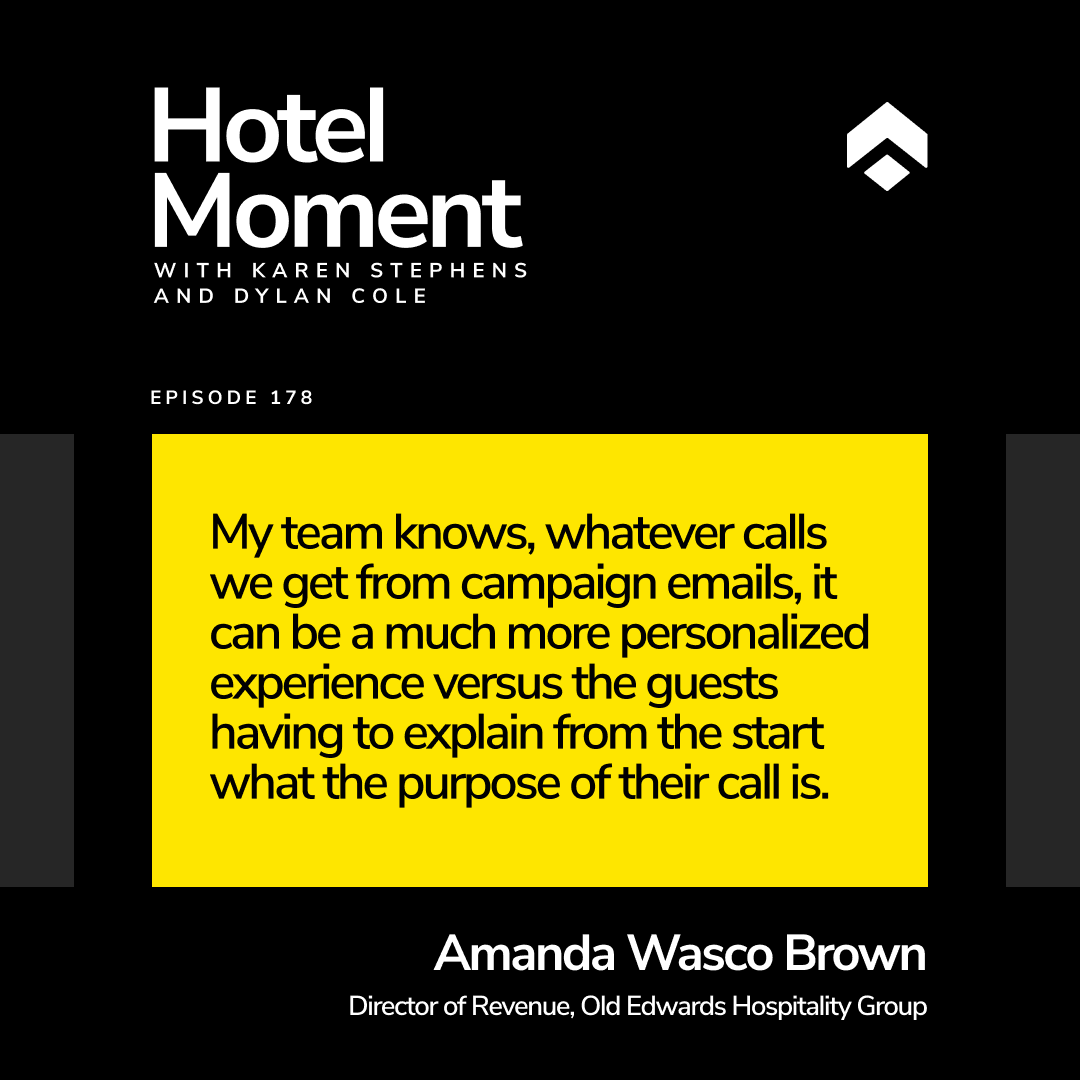
[00:09:52] Amanda Wasco Brown: Yeah. We use the marketing platform in Revinate. So our emails come out of that. Our marketing team has really switched to more of a targeted email campaign strategy. So, you know, addressing the people that are being emailed versus just a blanket email blast. And then we do use the campaign function so my team knows — whatever calls we get from those emails, what they’re calling for — it can be a much more personalized experience versus the guests having to explain from the start what the purpose of their call is. And then we also, I think a couple of years ago, brought in shopping cart abandonment. And that’s been — we’ve seen pretty big success with that as well.
[00:10:31] Bailey Yeats: So are your agents performing outbound calls for a shopping cart event or is the email marketing side taking care of the cart abandonment leads?
[00:10:40] Amanda Wasco Brown: Email marketing side is, and then, you know, myself or the reservations manager will glance through it and if we see something that’s really hot, we’ll have somebody call them. But for the most part, it’s a call-to-action email.
[00:10:50] Bailey Yeats: Awesome. Yeah, that’s great. Something that Amanda’s talking about here is the campaigns and the toll-free numbers. So for those that don’t know, we have the ability to add toll-free numbers into your email marketing campaigns. And when someone does make a reservation — makes a booking — or I guess when they call with that high-intent lead, and Amanda’s team picks up, because that call is tied to that toll-free number and that campaign, they’re actually able to see what that guest is calling about. So if they’re calling about the spring offer that’s 30% off, the agents already have that information. It makes it a lot easier when the phone rings for those agents to already know what the guest is calling about. So I love to hear that your team is using that. When I found out about that — a feature that Revinate had — I was blown away and I thought, this is the most remarkable thing to be able to have that knowledge before you even pick up the phone. And so one report that we do highly suggest that you use for checking your call volume is the call volume analysis report, which makes sense. And that’s going to help you identify those peak times. And something that I often suggest — I think if you’ve been on a couple of these webinars, you know that my background comes from marketing. And so speaking with someone who comes from reservations, we’re like the dynamic duo here. But something that I found to be very insightful was this call volume analysis report, to be able to inform me when I should be sending out campaigns as a marketer. And so if I know that Amanda’s team is going to be extremely busy during certain peak hours of the day, I don’t want to send an email marketing campaign during that time because I don’t want to overwhelm them and potentially have some calls that are missed or abandoned. And so finding that little shoulder time during the day, I think, is really a valuable time to be sending your emails. And that’s going to effectively help the phone ring even more for your reservations teams. The next one we have — so once the phone rings, are we converting them? This call conversion rate — we notice it’s, you know, winter and spring are the best at 49 to 53 percent. And what this really represents is the percentage of inbound calls that are specifically designed for booking, right? So they’re not a service inquiry, they are not customer service — they are actually calling with the intent of booking. Analyzing this rate, especially during the peak seasons, helps you identify your high-performance periods. And then in this, you know, you get to spotlight those more significant opportunities to implement your targeted training and your strategies to boost conversion during lower-performing seasons. And so what’s the impact of knowing what these conversion rates are? I spoke with one of our Revinate team members one time who used to be a reservation sales manager, and he said that conversion rates for voice are the NPS for the voice channel. So it’s really like the net promoter score for the voice channel. It informs the hotel on where to spend their efforts and what areas to develop and nurture. And I thought that was really, really good. He also said, you know, if you didn’t have conversion rates, you wouldn’t even know where to begin, right? It’s like the flashlight for your next right step. So Amanda, tell me — would you echo that sentiment that Brent shared with me about shining the flashlight on where it could go?
[00:14:10] Amanda Wasco Brown: I agree with just about everything Brent says. But yes, definitely. The conversion rate for us — right now we have a newer team, so being able to track that really helps us dig into who needs more coaching, a little more — not necessarily hand-holding, but a little more love, a little more coaching. And then as the revenue director, for me, when I see lower conversion at different times, I’ll go into another report that I love, which is the nightly lead demand report, and see what’s the reason for specific dates — or, you know, if it’s over a booking period where conversion is lower, what dates are people asking about? Do I have rates too high? Is it a policy thing that I just can’t change? So it’s another data piece that’s really helpful.
[00:14:50] Bailey Yeats: Yeah, that’s great insight. And I mean, you’ve already touched on some of these strategies just with what you said, which is great. I think it always helps other reservation teams to have strategies for how you’re improving conversion rates because it might not be something that they really looked at. So we’ll talk about each of these and then I would love some input on how you’ve been coaching your team. So the first one here is obvious — you know, training and coaching. So how do we get them to be more successful in their role and empower them to do their job well? We always encourage that you follow the 10 non-negotiables set by Revinate. And I think that’s really a good baseline for all reservations teams. And of course, we encourage you to add on to that and make sure that, you know, they’re working for you and your market. But they really are an effective tool to use. The other one is lead form compliance. You know, you want to verify that your reservation agents are adhering to those best practices and making sure that they’re completing the lead form accurately. Because when they complete that lead form accurately, it populates everything into the CDP and gives everyone a more unified view of that guest data. Something that I love to highlight when we talk to agents is the importance of their job, right? They are the foundational piece to everything guest data. They’re the ones who ultimately enter in that first data piece for that guest. They’re like the foundation of the house. And the rest of the team builds on top of that house. So when they understand the importance of their role, it almost makes them feel empowered to do it better. And so the other thing is relying on expert support. If you have a great team like yourselves that are, you know, constantly coaching and training — that’s fantastic. But if you need to lean on another support system, please do that. We have a best-in-class training team. And I don’t just say that because I was part of it. We are known to be best-in-class training. We’ve got excellent resources and dedicated training services, with people who have been doing this for years and years and know how to move that meter. So don’t hesitate to reach out and lean on those people. But Amanda, I mean, you have been coaching teams for a very long time. You’ve been in this industry for — you said 14 plus years, right? So I would love to hear words of advice from someone like you for a team that’s just starting out with reservation sales from Revinate. What are some words of advice you would give them?
[00:17:10] Amanda Wasco Brown: For me, making sure your agents are very comfortable with the non-negotiables. Those are huge. And then we — and I’m sure every manager on this call has done this — we do a lot of role-playing, specifically on making sure our agents are comfortable asking, “Do you want to make that reservation?” — closing that sale, offering a follow-up call. Besides asking for an email and phone number, that seems to be the biggest block for newer agents. Just that uncomfortability of, oh, you know, “I don’t really want to ask them.” But I mean, that’s — we all know that’s how you close the sale. That’s how it happens. And then we’ve actually taken advantage of using Revinate training. We brought — I don’t think you were with us on that one, Bailey — but Brent and a few others came on-site a year or two ago and that was huge for our team. They love the in-person face-to-face time and it was a great resource to have.
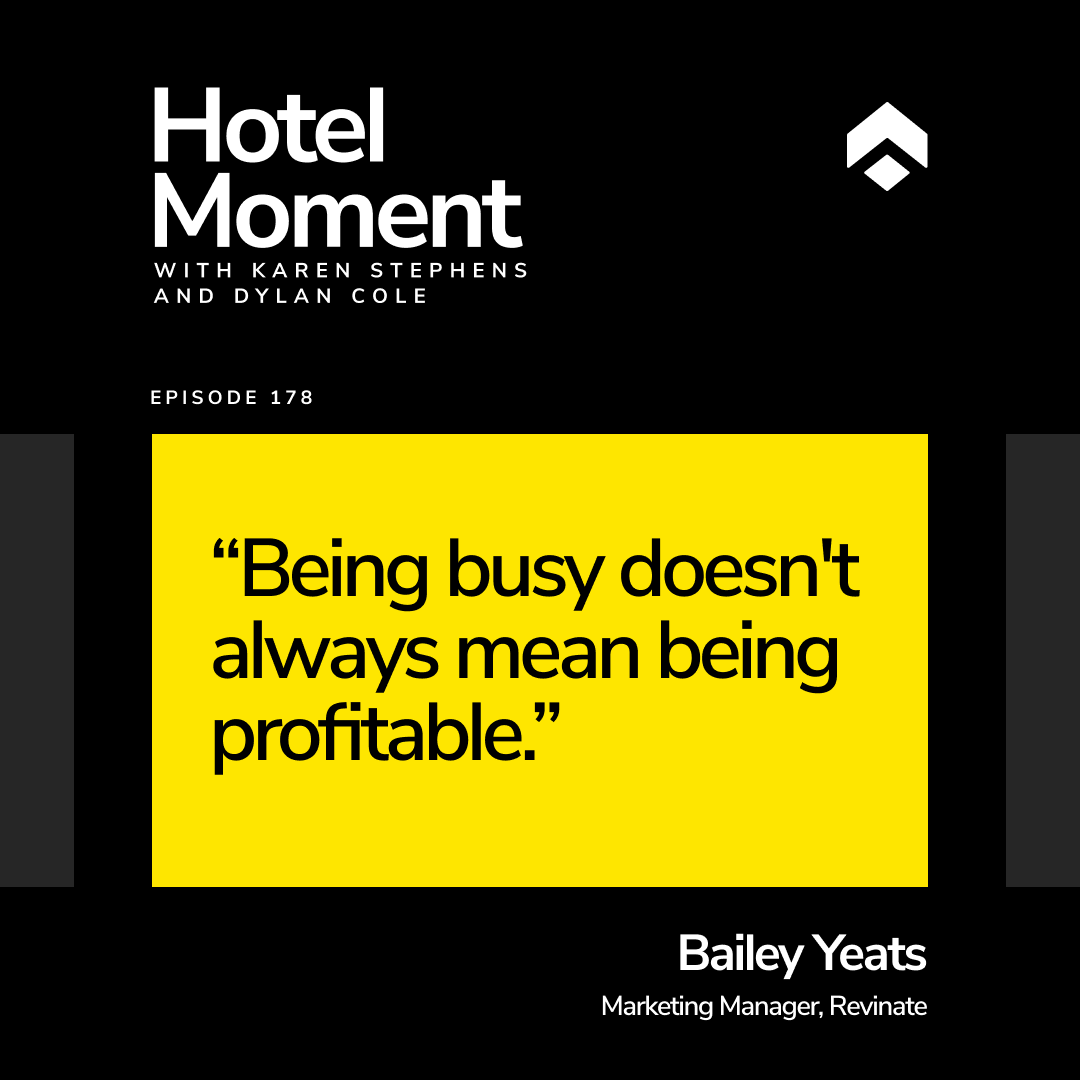
[00:17:59] Bailey Yeats: Yeah. And I think you’re a hundred percent right. There’s gonna be those sticky points where it’s intimidating to be an agent for the first time, having to ask for the deal or having to ask for the email. But the more they do it and the more training they have and support from teams or from the management — like you, who’s been doing it for a long time and who understands those pain points — I think the more empowered your agents are going to feel. So love to hear that. All right, the next one we have is our non-booked inbound lead volume per room. So June and July have the most non-booked inbound leads on average at 1.5 calls per month. It kind of makes sense, right? Because the summer months are going to be your peak months in general for call volume. And so you probably are going to see more calls not booked because you do have that greater call volume. So the winter months are actually where you see your strongest efficiency because there you’re seeing the 0.74, 0.76 non-booked calls. And so — summer, high demand but higher friction in the booking process. And winter, greater booking efficiency, but just not as many calls. So what’s the impact of knowing about your not-booked calls and tracking these spikes? Tracking the spikes in lost opportunity is actually more crucial for leaders to be able to identify why that’s not happening — why are we not able to book? And the data actually highlights areas where the sales strategies or property offerings might need to be adjusted. So Amanda, why is it important for your team to know when the highest non-booked lead call volume occurs?
[00:19:35] Amanda Wasco Brown: So going back to that report I talked about — the nightly lead demand report — having the data to tell me those non-booked lead spike times allows me to not just be searching for a needle in a haystack. I actually — like I said earlier — I can go to the date specifically, the contact date range, to see, okay, you know, these are when we’re seeing the biggest spike. And again, go in: is it a policy thing? Is it a rate question? Or — like you said — check out the offers on the website. What’s our marketing team pushing? Is that working? Is that not working? And again, we’re already into our strategies.
[00:20:08] Bailey Yeats: Yeah. So how do we address this non-booked lead volume? This is already it, right? We’ve started with the marketing efforts and the objections. So why are we — what are we finding for the root objections? What are the common reasons why people are not making a reservation? We can go again into agent training. Agent training just keeps coming up over and over and over. Make sure that they’re empowered with the tools, right? But conducting sessions to equip them on these specific objections that you’re receiving. So is it rate resistance? Is it — I don’t know, what other objections do you get, Amanda?
[00:20:44] Amanda Wasco Brown: We have nightly minimums on the weekends. I’m sure many of you do on the call. And one of the things we did — we have three properties at Highlands, one of which is our most economical property — was we were doing the same nightly minimums as Old Edwards year-round. And we just weren’t selling in the winter time. So that was one of the things that I immediately took away when I moved into this role — I took down the nightly minimums in the winter, and that was extended into half of quarter two as well. And that helped — the abandonment report and forecasts just jumped tremendously because of that.
[00:21:16] Bailey Yeats: Yeah, and that goes into the next one here — management intervention. Trying to figure out what are the trends. Is this something that management should review? So, like you said, a nightly minimum — what is the root cause? And so I think that that’s a really valuable piece to the puzzle, and being able to see with that drop-down of, well, why didn’t they book? On the lead form, your agents are marking the not-booked reason. And then we’re able to look at reporting to be able to find out what those reasons are. And then we do have a little hot tip here, and I’d love your inside knowledge on this as well. You know, using lead nurture emails to convert not-booked leads into calls or bookings. So this goes back to the whole cycle — they didn’t make a reservation, we nurture the lead to make the phone ring again, and then we come back up, right? And it goes in this circle. Is your team using lead nurture emails to nurture your guests, or how are you nurturing them when they don’t make a reservation?
[00:22:11] Amanda Wasco Brown: We could definitely be using that more on the marketing side of things. Not using it as much as we should — or could, rather. But with the lead forms being filled out and because Revinate is our CRM and it’s our feedback and marketing — we have all of the suites that Revinate offers — with the clear and concise data and correct data, our marketing team can send out those targeted emails that, you know, I talked about earlier.
[00:22:33] Bailey Yeats: Yeah. And I think that it’s a very valuable tool to be able to feed calls back to your team, right? Of course, we can take the data and run some one-time campaigns through marketing or the automated campaigns through marketing, but it is nice to know that these were warm leads in the first place. So I love to hear that you’re putting efforts in there. All right, and our last one here is outbound calls. So we’re looking at the average incremental revenue per room from outbound calls. What our report found in 2025 was that agents are driving $1,164 of incremental revenue per room per year from outbound calls. So again, we go back to our 100-room hotel — it equates to an average of just over $116,000 in additional, unexpected revenue. And unexpected revenue is the most amazing kind, right? This generated simply through a proactive outbound call. So what’s the impact here? The impact is more revenue, and that’s what we really love — is to see that we’re finding that hidden revenue. The other part is it’s a lower acquisition cost, right? So you’re not having an OTA commission to pay because you are actually performing this outbound call and it’s then marked as a direct booking, not an OTA. Plus, you’re securing their guest data to have in your own database, which are two things that are really, really wonderful for hoteliers. And of course, what guests love about it is that it offers this high-touch service. So by using proactive outbound sales or outbound calls, it shows guests that you can build trust with them and that you care about their experience and that you want them to have a really good time at your property. So Amanda, in times that your agents are able to make outbound calls, what impact do you notice with your bottom line?
[00:24:22] Amanda Wasco Brown: So this one, unfortunately, is a tough one for me to look and reflect on, just because of my staffing level. Most of our outbound revenue is just from returning voicemails and responding to emails and that sort of thing. In the eight years I’ve been with this team, it has been my dream to have outbound-specific agents to be able to do that, because from every res manager I’ve talked to that does deploy outbound revenue — it’s huge. And it’s great response from guests, great for the bottom line. We’ve just been so focused on our inbound abandon rate for the last few years that it’s hard. I’m sure a lot of people on this call probably feel that way as well. It’s hard to make the time to take agents off the phone to not cold call, but reach out to these guests that — if you’re looking at shopping cart abandonment, that left their cart or that abandoned their calls. I know one of the big suggestions is go through your list of abandoned calls over the last hour or two and start calling people back. And I wish we had time to do that.
[00:25:14] Bailey Yeats: And I think just by simply being able to return those voicemails through the system and being able to take the information to put it into a lead form is really helpful when it comes to outbound calling. I mean, it might be a small win, but it’s a win, right? Because again, they’re not going and booking through an OTA. They’re not booking through an agency. They’re booking through your team direct. So I think kudos to you for doing what you can with outbound calling with the staffing levels that you have. And we’re gonna hope for you to have an outbound team one day — that would be so exciting. But you know, when it comes to strategies for improving the incremental revenue through outbound calling — how many calls you’re making, regardless of whether you’re making hundreds of calls or maybe just 10 calls a week — you know, there’s still strategies to use when you’re making these calls. So empowering the agents — making sure that they understand the power of relationship building when you’re making those outbound calls and inbound calling too, right? We always want them selling the benefits over just the features because that’s the most effective way to sell the experience. Making sure that they have lead form accuracy — so when they do have the opportunity to make an outbound call, making sure they use the lead form that’s already there for them. It could pop up with the guest having previously stayed, or we may have already spoken to them and this is just a returning-their-call moment. Making sure they use the notes that the last agent left, or that they left themselves in there. And that’ll all give them the opportunity to see that holistic view from their rich guest profile. A loyalty outbound — this was one of the strategies that was suggested and I love it, right? You have these customers who you know who they are — the ones that stay every year, they book the same room, they do the same activities. Maybe proactively reaching out to them to connect before they make their booking is something that you could start doing to improve that experience. Talk about white-glove service. I would love that if someone recognized that I was a loyal guest and connected with me every year — that would be amazing. And then, like you mentioned, the abandoned calls. So calls that abandoned before they were connected with an agent — you can use the inbound call tracking to be able to identify those people and then call them back saying something like, you know, “We’re sorry we weren’t available when you called. How can I help you?” Again, we get back to this white-glove service that I think is kind of missing in our day and age, Amanda, to be honest. We’re very digital — our world is very digital. And I think people crave some sort of connection. And so outbound calling, or even just them being able to make an inbound call to you and your team, is so powerful when it comes to human connection in general. So do you have any other suggestions here for what we might say to an agent who is going to make an outbound call who’s probably pretty nervous to make their first outbound?
[00:28:09] Amanda Wasco Brown: Like I talked about earlier, I think role-playing. I know it’s uncomfortable for managers, it’s uncomfortable for agents, but it does really help get them comfortable with doing these things that — you know, I don’t love making outbound calls. It’s not my forte. But I know that I need the practice. And so, really, working with them, role-playing, and especially — you know, if agents — when we score calls, there’s the part of the scoring form where it says that they offered to make the reservation. We count “Can I give you a call back?” as part of that. So if you know a guest is like, “Oh, you know, you can talk to my spouse,” and then an agent proactively says, “Well, you know, I have time later this afternoon. What would work for you? I’d love to give you a call back.” Making sure they actually use their lead form to set that alert and call the guest back — and not drop the ball on that — because, you know, you don’t want to create a negative relationship with that guest.
[00:29:04] Bailey Yeats: Yeah, and that’s a great point that you bring up too about coaching — and scoring and coaching these agents. I think one of the big premises of our conversation today has been around empowering and training and coaching these agents to make sure that they’re successful in their role. And so obviously you’re using the coaching and scoring tools that Revinate offers. So can you give us a little bit of, you know, just a little insight into what it’s like to be coaching these agents using those forms and what you find to be most successful for you and your management team?
[00:29:39] Amanda Wasco Brown: This is a much better question for the reservation manager. I don’t use the scoring forms too much myself anymore. But for us, when we’re doing the free-form part of it — not just following the check marks — but actually putting in, you know, “Great job here, maybe try this.” And then our reservation manager has weekly one-on-ones with the team. So if there’s anything that she can give them kudos on, or something specific — it was on the form, but we really need to talk about this in person, you know, to correct or maybe try this. Not just doing the forms, but actually having the catch-up one-on-ones. We have half of a remote team, so we also do the one-on-ones just to make sure they feel connected to their manager and that they’re not siloed away from everyone.
[00:30:26] Bailey Yeats: That’s great. I think that’s fantastic. It’s not just checking a box where the agent gets their form and says, “Oh great, I scored well here and not well here.” It’s actually letting them know why and how we can work with you on that and train you to do better. So love that. That’s really good. And I can follow up with Sean, the RSM. I can follow up with her on that at Navigate.
[00:30:47] Amanda Wasco Brown: She’ll be out at the panels. If anyone has any more questions about scoring and coaching, you can go find her. She’s on a panel with Brent, actually.
[00:30:54] Bailey Yeats: That’s great. That’s gonna be a very, very powerful session. So yeah, if you’re watching, you might wanna check that one off the list at Navigate this year for sure. Well, Amanda, the benchmark report — you know, it actually really proves that savvy hoteliers are the ones that are collecting their guest data, they’re acting on the insights, they’re making their outbound calls, they’re following up on leads, things like this. And if you haven’t downloaded this report yet, I would highly suggest — not you, Amanda, but the people who are watching — I would highly suggest that you do this, because these are the hoteliers that are going to be successful in 2026. They’re the ones that are benchmarking: how did I do in 2025? How can I do better in 2026? So I would encourage you to watch the entire webinar series. We do have one, like I said, for email, for database health, and then of course this one from today for the voice channel. But if you want to watch the entire series, please email us at media@revinate.com and we will be happy to hook you up with that, or you can go to the website there listed at the bottom. We also have a benchmark scorecard for each region. So in North America, we can provide you with a scorecard that you can work with your team on to determine where you sit with each of those channels — so whether it be email, voice, or database health. We would love to provide that to you. So do not hesitate to reach out. Amanda, I thank you so much for being here today. I enjoyed our conversation. I always enjoy our conversation. And I hope that we’ll get to see you again soon. Thank you so much. Thank you to everyone here who joined us — not just for this session, but for the entire webinar series. And if you do have any questions about anything, hospitality, direct booking — we are always here for you. So please do not hesitate to reach out. Thank you everyone. Thanks again, Amanda. Really appreciate your time.
[00:32:41] Outro: Thank you for joining us on this episode of Hotel Moment by Revinate. Our community of hoteliers is growing every week, and each guest we speak to is tackling industry challenges with the innovation and flexibility that our industry demands. If you enjoyed today’s episode, don’t forget to subscribe, rate, and leave a review. And if you’re listening on YouTube, please like the video and subscribe for more content. For more information, head to revinate.com/hotelmomentpodcast. Until next time, keep innovating.
Episodes
Hotel Moment
WITH KAREN STEPHENS
Subscribe for updates on your favorite platform