Hotel Moment
WITH KAREN STEPHENS


Episode 175
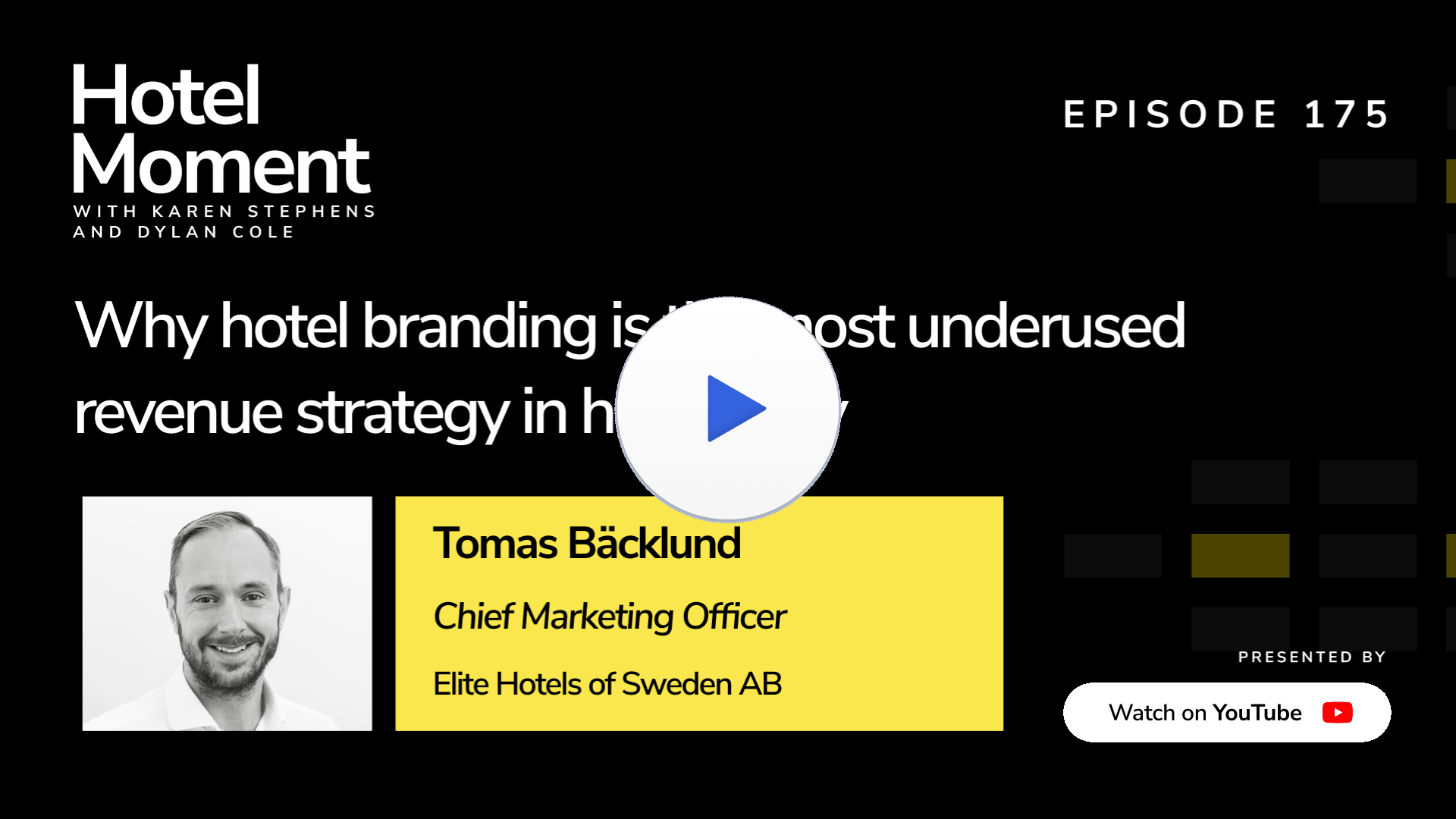
Why hotel branding is the most underused revenue strategy in hospitality
In this episode of Hotel Moment, host and Revinate’s Managing Director of EMEA, Dylan Cole, sits down with Tomas Bäcklund, CMO of Elite Hotels of Sweden, to challenge one of the biggest assumptions in hospitality: growth comes from optimizing pricing, distribution, and efficiency alone.
Because while those levers matter, Tomas argues there’s a more powerful and underutilized strategy hiding in plain sight. And that’s your brand.
As costs rise and margins tighten, many hotels fall into the same trap — cutting marketing spend and relying more heavily on third-party channels. But Tomas makes the case for a different path forward of building brand strength to increase pricing power, drive direct bookings, and reduce OTA dependency.
From the role of human connection in luxury experiences to the long-term impact of marketing to future guests, this episode reframes how hoteliers should think about growth.
Tune in to discover why the hotels that win tomorrow will be the ones investing in brand today.
Media
Do you have a branding problem?
The human touch is the way
You have 24 hours to spend with guests
Better brand, better prices

Meet your host
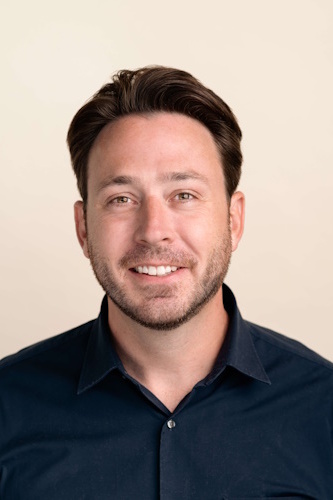
Karen Stephens
As Chief Marketing Officer at Revinate, Karen is focused on driving long-term growth by building Revinate’s brand equity, product marketing, and customer acquisition strategies. Her deep connections with hospitality industry leaders play a key role in crafting strategic partnerships. Karen has more than 25 years of expertise in global hospitality technology and online distribution — including managing global accounts in travel and hospitality organizations such as Travelocity and lastminute.com
As the host of The Hotel Moment podcast, she interviews top players in the hospitality industry. Karen has been with Revinate for over 11 years, leading our global GTM teams. Her most recent transition was from Chief Revenue Officer, where she led the team in their highest booking quarter to date in Q4 2023.
Meet your host
Dylan Cole
Dylan Cole began his career as a TV personality in South Korea. He then brought his love for travel and technology to Revinate where he played a vital part in establishing Revinate’s position in the US market, followed by the Asia Pacific region and now in Europe. Dylan is currently the Managing Director of Revinate Europe and is based in Amsterdam.
Watch the video
Transcript
[00:00:00] Tomas Bäcklund: What I’ve been going around telling people in the last five years is that there’s another way of doing things. If you increase your brand, you can charge more. You see this in every single industry all over the world.
[00:00:15] Intro: Welcome to the Hotel Moment Podcast presented by Revinate. This is your podcast to understand how technology can shape every moment of the hotelier’s experience. Tune in to explore cutting-edge technologies and to hear from experts who are shaping guest experiences. It’s 2026 and I’m Dylan Cole, the Managing Director of Revinate Europe. Along with Karen Stephens, we’ll be bringing you a fresh perspective on what matters most to hoteliers.
[00:00:42] Dylan Cole: Welcome to the Hotel Moment. Today we’re thrilled to have Tomas Bäcklund, Chief Marketing Officer at Elite Hotels of Sweden, one of the country’s leading premium hospitality groups. Tomas sits at the intersection of brand, digital, and commercial strategy, overseeing everything from full funnel marketing and loyalty to hotel concept development and future-facing innovation. Under his leadership, Elite Hotels has driven significant revenue growth, expanded its loyalty base, and strengthened its direct booking performance. Tomas brings a strong perspective on why branding — not just distribution — is becoming the defining factor in profitability and long-term success for hotels.
So without further ado, welcome to the show, Tomas. It’s a pleasure to have you.
[00:01:28] Tomas Bäcklund: Thank you so much.
[00:01:29] Dylan Cole: And I think the audience will really benefit from hearing what you have to say today. And before we get into some of the questions about building brands and your portfolio and all these kind of marketing-related questions, I actually wanted to ask you something about your preference or your favorite hotel in the world. Yeah, okay, I know. It’s a tough one, right? And I wanted to give you two options as we start. You can either pick something from your portfolio — your favorite property, and what makes it special or unique — or if it’s hard because they’re all your favorite children, then you could pick one from around the world that’s your favorite and is special and unique. But is there anything that comes to mind when asked this question?
[00:02:12] Tomas Bäcklund: For me, the hotel itself is not what makes or breaks it, it’s the people who work there. And one of the biggest experiences I had was me and my wife were going to the Philippines a long time ago and we were going through the jungle and we were getting more scared as we went along. And at the end of a small dark dirt road we stopped, and then there was this hotel and it was like twelve villas on a beach run by a Texan, woman from Texas and her husband who had moved to the Philippines, and everyone who worked for the hotel was local. And she told me that she could just as easily hire people from Manila with great professional skills, but she wanted to do something for the local community. So she trained everyone from scratch. They trained the chefs, they trained the housekeeping, they trained the front desk — I mean everyone was local. And the sheer hospitality and warmth of that place alone was just groundbreaking.
It was one of those times — ’cause I wasn’t working with hotels at that point — it was one of those times where I really fell in love with the hotel experience. You know, every morning when we woke up there was this woman who came and she said, “This is what we made for breakfast today.” And she showed us and she was so proud of her work and you could really feel it. It was so far from an industry. It was the complete opposite of an industrial experience which we’ve all had when we stayed at these huge complexes. This was just passion in its rawest form. And the owner of the place, she held the yoga class herself. And I mean the husband was in the kitchen helping out. So it was a really cool experience.
[00:03:55] Dylan Cole: How long did you stay?
[00:03:57] Tomas Bäcklund: We were there for about ten days and then we went to the other side of the island. It was an island called Palawan. And on the other side is the most famous part, which is called El Nido, which according to legend is where the book and the movie The Beach was written — he lived in El Nido. And you can imagine if you go around to the beaches and you picture yourself around there, you know, the one with Leonardo DiCaprio. You could really see yourself because there’s an archipelago of tons of islands with white beaches and just crystal clear waters. So it really resembles the kind of atmosphere that’s described in the book. But this was on the other side of it. It was called — I don’t think that hotel exists anymore. It was more of a passion project for these two people. But it was amazing.
[00:04:42] Dylan Cole: I think you’re right. You can make the most beautiful hotel in the world, but if the people inside it aren’t making the experience great or really caring about what their guests are experiencing, it just — it won’t work.
[00:04:54] Tomas Bäcklund: I definitely had those as well. I remember one in the south of Italy, me and my wife when we came to this hotel. And it really looked the part. It was like on a cliff, beautiful pool overlooking the ocean. Everything was brand new. They made the architecture good, landscaping was good, everything looked the part, but I mean the service was so bad. The food was even worse. I mean, we hated that place. It kind of goes into how important the service aspect is in hospitality. And I mean, the more we go into AI and the more everything is automated, I think that human touch will be the next luxury. I really do. I’m not knocking the hotel groups that are automating everything. I really understand why they do it. It’s so cost efficient, it’s scalable. But if you’re talking about premium experiences or luxury, I think that human touch will be it going forward.
[00:05:47] Dylan Cole: Sure. And there’ll be the people who don’t need high touch. That’s not what they’re looking for. They just want a bed to sleep in. They want a cost-effective way to stay. And then there’ll be those that do want high touch and you’ll have to pay for it. Right.
[00:05:58] Tomas Bäcklund: Yeah, I think that’s the two kind of main trends I see right now within hospitality. I mean, I really get it. If you — I mean you’re the kind of guy, you have a business meeting, you’re in Amsterdam. We have a meeting for four hours and then I’m off to bed. I’m off the next morning. I just want something convenient, easy. I don’t — I don’t necessarily want to talk to people. I just want to get my room and be on with it. On the other hand, what I can see is also that people who pay for an experience rather than a room. And that’s when you need to use the digital aspects of things in order to enhance the experience rather than replace it.
[00:06:36] Dylan Cole: I agree. I wanted to ask you this. It might be kind of going back a little bit, but to your point about having the experience of staying in that Filipino hotel, having the experience where it was the worst one — and you mentioned prior to your role now you were not in the hotel industry or hospitality. What drew you in? What brought you into it?
[00:06:58] Tomas Bäcklund: Sheer coincidence, to be honest. I mean, it’s funny, I’ve been in the hotel industry for more than five years now, and I still don’t see myself as a hotel person. Not that there’s anything wrong with that, but I see myself as a brand guy first and foremost. So I was at a creative agency and one of the headhunters that I used to talk to like years earlier called me up and said, Listen, I have this ongoing process and they’re all from the industry and I want to throw in a joker — something out of the blue. And I thought of you. And I thought, okay, interesting. And I had all these meetings with the company and then it came to — you were supposed to do a case process, and when you’re at the agency side of things, that’s basically what you do all day. So I had — I don’t know — I got the assignment on a Friday and I was supposed to pitch it on a Monday, and I was like, oh that’s great, that’s more deadline than I’d had in years. So I managed to do like a thirty-five slide deck presentation on how to transform a hotel into something else, and that’s how I got the job.
And I mean I knew the company very well because it’s famous in Sweden, and it was founded by this amazing entrepreneur. He came to Sweden like in the sixties from India having basically nothing, and I’m looking at an article now that is from the Saturday of the nineteenth of March, nineteen sixty-six, and it says he came from Calcutta to get Sweden’s nightclubs going. And Bicky, the founder — I mean three months after stepping foot into Sweden in the sixties he was already making charity galas. So he had a force like no other.
And my last interview was with him. And I was kind of scared because I mean this guy built like an empire with his own hands. And I came into the hotel and we sat down by a table and he was presenting a bit about how he viewed the company, and all of a sudden he just stood up and turned around and walked away and I’m like, what did I do wrong? But somehow he managed to see a guy standing by the bar who wasn’t addressed quickly enough. And so he just went up to him and he’s like, Hi, can I help you? And the guy was like, Yeah, I just want a beer. And then he looked at Bicky and was like, Hey, are you Bicky? And he’s like, Yeah. And he said, but are you supposed to help me? And he’s like, yes, I’m supposed to help you. And then I was like, he really takes his service seriously. And then he came back and I was just perplexed looking at what just happened. And then he said, Well, I’ve never had a CMO and I don’t really know what I need one for, to be honest. And I was like, this is going great. And then he said, but my daughter thinks I need one, so here I am. So tell me, why do I need a CMO? And I was — I was not expecting this call.
[00:09:52] Dylan Cole: So what was your line? What was the hook for why he needs one?
[00:09:55] Tomas Bäcklund: No, the thing is he didn’t need one. In all honesty, he was the CEO, the CFO, the head of sales, the marketing director. He was everything at once. He was a spectacular human being. And when he built the company, he built the brand by being on every newspaper every week. He was on TV all the time. Because the story of a guy who came from India to Sweden in the sixties and built it from scratch was so spectacular that he’s one of few people I know that could call any newspaper or anyone in the media industry and get an interview the day after. So he built it around himself. And back then there was no social media, there was no online video. He built the company using PR.
So my pitch was basically that when you don’t do those things anymore and when there’s a much more fragmented landscape in terms of where you should be seen and how to run it in terms of marketing, you need someone to do it for you. And I mean, at that point he was seventy-three, so he couldn’t be running around sitting in TV sofas all week as well.
[00:11:10] Dylan Cole: I want to ask you a question about this. So I think where you’re going with this, right — like you’re great at building brands, right? This is something you’ve done in your career. And I see a lot of groups or hotels, they invest a lot in their distribution. They’re really good at distributing their properties everywhere. Okay. But then you see people not invest in building the brand because you might not see the immediate ROI. These might be longer-term goals in building a brand. Where would people suffer or see challenges in their business eventually if they don’t invest in brand?
[00:11:42] Tomas Bäcklund: Yeah, so that was one of the things that kind of always surprised me with the hotel industry — in terms of distribution, like you said, all of the big companies are more than amazing. I mean they have this worked out to the max. But in terms of building brand, very, very few companies are good at it. And I mean if you look at what’s happened to the industry on a global level — or especially if you look at the US and Europe — you’ve seen the rise of costs. You’ve had the inflation and it’s coming back, whether you want it or not, due to what’s going on in the world right now. Cost of everything will go up as a result of oil going up. So inflation has driven up costs. So cost of labor is up, the rentals are up, everything is up basically over the last five, six years. But what we have not managed to do is to increase prices at a corresponding level, which means that profit margins are going down. And one thing you can be very sure of is that your CEO and your CFO and the board, they’re looking at this and they’re saying, listen, the profit margins can’t shrink anymore. They need to increase. And what they do, generally speaking, is cut costs, right?
[00:13:00] Dylan Cole: Or — yeah. I was gonna say raise prices. But you can’t raise the prices that much because your consumers are suffering from that.
[00:13:07] Tomas Bäcklund: Yeah, so basically you’re in a catch-twenty-two. And the easiest way to cut costs is like reduce marketing or FTEs. And what I’ve been going around telling people in the last five years is that there’s another way of doing things. If you increase your brand, you can charge more. You see this in every single industry all over the world. I mean, I usually take these banal examples — like, the quality difference between a cheap t-shirt and a Gucci t-shirt is not the reason why the Gucci t-shirt is 8,000% more expensive. It’s brand.
And I remember I had this conversation with the director of the board, and he’s running a lot of companies — the biggest companies in Sweden. And I was asking him if there is a correspondence between quality and price — like ADR and the level of service and quality that you deliver. And he was thinking for a while and he said, well, no, not really. That’s what you do. That’s brand. And I agree. I mean if you manage to strengthen your brand, you can also charge more without your clients feeling that they’re being overcharged. And that’s the key element here.
They made a survey in 2023 in Sweden. It was Kantar, and they made a brand equity study and they looked at — because they measured the biggest brands in the world. And not surprisingly enough, you had IKEA at the top and you have the likes of Volvo and Spotify. And there was one hotel company in the top 30 — one of our competitors. And the funny part is that they were the number one company in Sweden in terms of brand strength in relation to pricing power, which basically means they can raise their prices a lot without their consumers being angry. And yet I don’t see any of that happening in Sweden.
And I also get the question a lot — because there are not that many Hiltons, Marriotts, IHGs in Sweden — and someone says, Oh, you must be happy about that. And my reply is always no, of course not. I would love to see five Hiltons, five Marriotts, three Rosewoods, two Four Seasons, because what would happen is you would accumulate an international traveler that would be willing to pay more. And if you leverage that with brand, you can increase your prices. So Sweden is one of the most expensive countries in Europe in all aspects, except for hotels. That’s one of the very few things that are very affordable in Sweden. You know, like price of alcohol — super high, price of food — high, price of hotels — cheap. So you can stay in Stockholm at a really good hotel for less than 150 euros.
We’ve been talking a lot about this and one thing is that most of the market is domestic. So there’s three companies in Sweden that basically have the majority of it — or four if you want, if you take in franchise. So there’s Scandic at number one, there is Strawberry at number two, it’s us at number three, and there’s Best Western, who’s bigger than us but a franchise. And none of them hold more than a few percent of the market. So it’s extremely fragmented. So there’s about 3,000 hotels in Sweden, but there’s like a hundred Scandics. So they have a very little share of the entire market. That’s one thing. And then the rest is that most of our guests are domestic.
And in Sweden, when I grew up, the hotel scene in Sweden was horrible. I mean the hotels I stayed at in the nineties were like — you really don’t want to stay here. I mean I used to call Sweden the last Soviet state when I grew up, which was harsh, but the innovation in terms of that wasn’t really great. What Bicky, the founder of my company, did was that he saw the service level of other hotels in Amsterdam and in Paris and in London and New York and he said, I want to bring this to Sweden. So something changed. But the idea of paying a lot for hotels has stuck with us. So it’s still a thing. So I mean I still have friends, they’re like, I don’t spend more than 200 euros in Sweden for a hotel. And I say, but you spend 400 or 500 in London or Paris. Yeah, but it’s more expensive there. So it’s an idea and a brand problem the entire industry is suffering from. And paired with the fact that no one kind of makes the argument for why you should pay more, you’re stuck in it.
So I think as well that if we were to get a few super high-end hotels in Stockholm with a more international set of travelers, that would affect the entire industry more. Because we don’t have enough hotels in Stockholm — nothing was built during the pandemic, but the number of travelers increased. So the occupancy rates in Stockholm are super high, but there’s no new hotels being built.
[00:18:03] Dylan Cole: It’s a funny thing you’ve said there, right? Because the comment is that they’re more expensive cities, right? But no, everything else is equally if not more expensive there except for the hotels.
[00:18:15] Tomas Bäcklund: We made this comparison a couple of summers ago and we looked at Sweden as a whole and looked at average ADR during summer. And we compared it to the rest of Europe. And you know, we were like half of what Italy had. And Italy’s Italy. But we were somewhere between Slovenia and Bulgaria in terms of ADR. Which — I’m not knocking those countries at all, but they’re far from as expensive as Sweden. So there is a discrepancy in terms of what we’re charging in Sweden for a hotel. And I think one thing is the culture and what people are willing to pay. And the other thing is that we as an industry haven’t done our job in explaining why you should pay to stay with us. What’s the experience you’re selling? Like you said, we’re great at distribution, but why are you supposed to have the experience and why should you pay for it? And that’s the idea of marketing and branding — you’re supposed to convince people of why they should do something.
[00:19:17] Dylan Cole: And is this a valid thought too? Like it might be all well and good when the economies are roaring and everybody’s doing great and everyone’s traveling, and at that point maybe the brand doesn’t matter as much because there’s plenty for everyone. But when actually things aren’t as good, that’s when it starts to come to light where people haven’t invested in their brand. Is that a fair statement?
[00:19:43] Tomas Bäcklund: I think so. I mean up until like 2019 there wasn’t that much use for it because you had the different distribution channels and yes, the OTAs charged more than you were willing to pay. But at the end of the day, I mean, a lot of companies had a good time, you know. And what we can see over the last five years is that everything has become more expensive. Cost of goods up, margins down, cost of labor up. And so the more we’re going in that direction, the more companies will have to worry about their brand. And I think — I mean, I see a lot of companies like, yeah, we’re gonna do efficiency with AI. Yeah, you need to do that too. That’s the thing. I mean you need to get more people being more effective and doing more work with fewer people, but you also need to increase your brand strength in order to charge more. I mean, one doesn’t exclude the other. I don’t understand. But one of the conclusions I’ve come to — I might be wrong here — but one thing that I’ve noticed is that a lot of people in high-level positions in the industry seem to go from one place to another. So I mean if you look at their CVs, there’s like they’ve been in this company and then that company and then that company. And it’s the same for everyone else in the competition. So everyone has basically the same ideas going round and round and round.
Which is interesting. And I shared this thought with a headhunter from London, and he just laughed and he said, Well, you’re basically right. And that’s usually the brief we get. It’s like we want someone with a fifteen-year track record from within the industry. And it’s like — the thing is I do get that from an operational standpoint, I get it even from a sales standpoint, I get it from a revenue management standpoint, but I don’t get it from a marketing standpoint. I mean, I’m speaking figuratively here, but if you take one of the top brands in the world — if you take Coca-Cola’s or Nike’s former CMO — do you think they’ll do a bad job in the hospitality industry? I think they would revolutionize the place. Because marketing is a different beast, a different animal. You don’t have to know hospitality in order to be good at marketing. You need to know marketing in order to be good at marketing. But I 100% respect that there’s a huge difference in terms of — if you need to run operations, you better know hospitality.
[00:22:01] Dylan Cole: You’ve actually kind of helped me navigate right into my next question here. And I wanted to ask you about that. So given your experiences and working in other industries, I wanted to know if you’re often drawing from other industries today as you’re thinking about your marketing, and are there other industries that you think other hoteliers should be looking at more these days to draw inspiration from?
[00:22:28] Tomas Bäcklund: Yeah, I mean I basically don’t look at very, very, very few other hotel companies’ marketing. I draw most of my inspiration from retail. I think they are usually the best in terms of emotionally connecting with their consumers and building experiences. And unlike us, they don’t have the fortune — I mean, if you run a hotel, you have your client for twenty-four hours at least. If you run a retail store, you have them for like fifteen minutes at best, cycling on a digital platform. So we have so much more opportunity. But that’s also I think why they are so much more creative in terms of how to build the relationship with their customers.
If you take one of my heroes, Jonathan Anderson, what he did to Loewe — it’s nothing short of amazing. I mean he created an entire universe for the brand that was unlike anything else I’ve ever seen. When you walked into a Loewe store, it was like a floating aquarium, like a jungle. It doesn’t even look like a store anymore. So he took a brand that was — I wouldn’t say it was nothing, but it wasn’t even close to what it is today. And the same — you can say whatever you want about Demna Gvasalia, about what he did with Balenciaga, going from a brand that was almost forgotten to the most hyped up, most important brand in the world. That’s brand building. And he didn’t do it by showing 58 million versions of “buy this now, there’s a discount.” He built the brand.
And if you’re looking for brand building, look at retail, because that’s where you find the most. I’m not saying that there aren’t really good brand builders within hospitality — there’s plenty of them. I mean, if you take the likes of — say what you want about Soho House, but what they’ve done in terms of — I mean at their absolute top they had what, twenty hotels, and every single person in the world knew about them.
[00:24:18] Dylan Cole: Everybody knows about it.
[00:24:20] Tomas Bäcklund: And I mean they don’t have 5,500 hotels. They had 20. And everyone knew about Soho House. That’s marketing. And they have most of their revenue coming from people that don’t even stay at their hotels. They just want to be members. They just want to be associated with the brand. And I mean, obviously you always have a problem when you build hype brands. And if I understand Nick Jones correctly, what he was trying to make was an affordable premium experience that was niched towards a creative set of people. But still — I mean, it’s probably one of the coolest brand building cases I’ve seen in the last twenty years, or even more.
So yeah, I do get some inspiration. I think that there are a few hotel companies that are doing some really good work, especially if you look at the wellness side of things. I think in terms of product development there are a lot of hotels doing a lot of good things, but in terms of branding there are kind of few — especially when you look at how many luxury and premium hotel groups there are in the world. Very few invest in brand.
[00:25:24] Dylan Cole: I really like this point you’ve just made about the hotel. At a minimum, you’ve got somebody for twenty-four hours. A retailer has got you for fifteen minutes. Maybe less if you’re on the website and you do a one-click checkout, right? So they really have to be creative, and if you could take some of those learnings —
[00:25:40] Tomas Bäcklund: I mean, we should have a much better opportunity to build loyalty towards the people who stay with us. Because we have them within our home for twenty-four hours, which — I mean that’s unparalleled if you talk to other industries. Ask a car dealer — it’s like, would you sell this car if you had the client within the shop for twenty-four hours? And they’re like, yeah.
[00:26:02] Dylan Cole: That’s the old trick, right, where they take your keys so they can see how much your old car’s worth and you can’t go anywhere.
[00:26:08] Tomas Bäcklund: Yeah, yeah, yeah. Exactly. Yeah. I mean if you look at the car industry, they also have a branding problem at the moment. Because I was looking at cars the other day and I was looking at Porsche because I like the brand, and I could see that if you buy a Porsche that’s gasoline it’s priced higher than the modern hybrid versions. So the old versions are priced — I mean at the used market — people are willing to pay more for an older technology than they are for a new one. And I think that has to do a lot with the fact that — there are of course some reliability concerns with new technology — but I think mainly it has to do with the fact that they built their brand so strongly connected to the engines, to the roar, to the experience of hearing it when you’re driving. And they haven’t built the brand in terms of the new technology. So the people are like, why should I pay a hundred thousand dollars for a hybrid car that I don’t even want.
[00:27:09] Dylan Cole: Right. Very interesting. And we’re getting towards the end here. I wanted to wrap it up with a kind of final question for you for the audience, if you don’t mind. You know, for hotel leaders that are looking to strengthen their brand — and we talk a lot about direct bookings — if you were talking to a leader that wanted to strengthen their brand and drive more direct bookings at the same time, what would you tell them if somebody was lucky enough to have somebody like you in their presence?
[00:27:35] Tomas Bäcklund: Yeah, so we managed to increase the revenue share of the website by almost ten percent over the last five years. So in terms of the share of how many people use the website to book in comparison to how it used to be. And I mean, first of all, I think that one of the problems is that you’re always looking for quick wins, right? So if you look at — you know — like a pyramid, or if you do funnel thinking, at the bottom you have the people who like you and are pretty willing to buy from you right now. And when you target everything you communicate only to that group, you’re only communicating with your existing customer base. If you want to grow, you need to talk to people who are outside of your customer base. And the next layer would be people that are interested in buying from you but probably buy from you sometimes and from other people sometimes. And the third layer would be people who most likely buy from someone else.
If you want to grow your existing customer base and have them come to you instead of somewhere else — the OTAs or your comp set or whoever — you need to communicate with them. But you need to do it over time, because the 95-5 rule is pretty valid within hospitality, which means that 95% of the people are not in a position to purchase anything from you at any given moment. So what you’re doing is building communication towards them so that when they are the 5% that are willing to buy, they will buy from you. So you need to just extend the time frame on which you’re looking at things.
That doesn’t mean you can’t look at how much revenue you’re acquiring now and tomorrow and next month. But you need to have a short-term plan, a mid-term plan, and a long-term plan in order to both acquire the ROI that you’re looking for — because you need to be able to show everyone within finance that you’re delivering the numbers — but you also need to look at the long term and see how you can grow your customer base towards your own direct channels.
The stronger the brand you have, the more people will come to you directly. And then there’s everything about — it’s a complexity to these things — but the harder it is to purchase from your own website, the less people will buy from it. Before I came in here, I was in an interview with Expedia, and they told me they had 4,200 data scientists all over the world. I don’t know how many hotel companies have that, but pretty few I guess. A lot of those people spend most of their days trying to make their website easier to book, better to book, more user-friendly, to use a very broad term. And if your website is super hard to buy from while theirs is really easy to buy from, and their loyalty program is super well communicated, you’re going to lose every day of the week. So you need to work not only on your branding — you need to fix your user journeys, you need to fix your loyalty programs — but when you have all three of those things working, more and more people will go to your website to buy than have done in the past.
[00:30:37] Dylan Cole: That’s interesting when we think about an ideal customer for our products. One of the first things I look at is what does their website look like? Because we could do all this work for them to attract guests, to bring guests back in the door, but if they land on the website and it ain’t bookable or easy enough, then our job’s almost impossible, you know?
[00:30:58] Tomas Bäcklund: It is. And I mean it goes back to these things. I love to read about branding and Ehrenberg-Bass is one of the biggest marketing institutes in the world, and they talk about physical availability, which is basically how easy it is to purchase from someone. And then you have the mental side of things as well, which is where you build your brand. But if you don’t have both of those things working — easiness to buy and being relevant — no one will buy from you. So you need to fix. I mean, that could be opening up new stores, but it could also be fixing your website. If it’s hard to buy from you, no one will, regardless of how great and creative your branding is. So everything needs to be working at the same time. And it also comes down to — since everyone in hospitality works with revenue management — if you set a really bad price, no one will buy from you either. So having the symbiosis of everything working together is basically how you grow your online direct bookings.
[00:31:57] Dylan Cole: It’s the dream. Everybody’s gotta come together and hopefully bring it together and make it easy for the guests.
[00:32:03] Tomas Bäcklund: I think you need to. I mean, the more costs are rising, the more important channel strategy will become. That’s one way of finding profitability. And I think that to find profitability these days — I kind of simplify it by saying strengthen your brand, that’s one key element for me — but you need to look at a broader picture and a variety of things to adjust in order to reduce your cost while not reducing growth. But I do think that the forgotten piece in hospitality is the branding, because that’s where you can charge more.
[00:32:42] Dylan Cole: Well, with that, I’m gonna end it here, but it’s really been a pleasure speaking with you. I learned a lot. I think that our listeners will have too. And congratulations on all the awards you’ve won, all the great things you’ve done for the group, and wishing you nothing but success moving forward.
[00:33:01] Tomas Bäcklund: Thank you so much.
[00:33:06] Outro: Thank you for joining us on this episode of Hotel Moment by Revinate. Our community of hoteliers is growing every week, and each guest we speak to is tackling industry challenges with the innovation and flexibility that our industry demands. If you enjoyed today’s episode, don’t forget to subscribe, rate, and leave a review. And if you’re listening on YouTube, please like the video and subscribe for more content. For more information, head to revinate.com/hotelmomentpodcast. Until next time, keep innovating.
Episodes
Hotel Moment
WITH KAREN STEPHENS
Subscribe for updates on your favorite platform