Hotel Moment
WITH KAREN STEPHENS


Episode 188
Why great guest experiences start before check-in
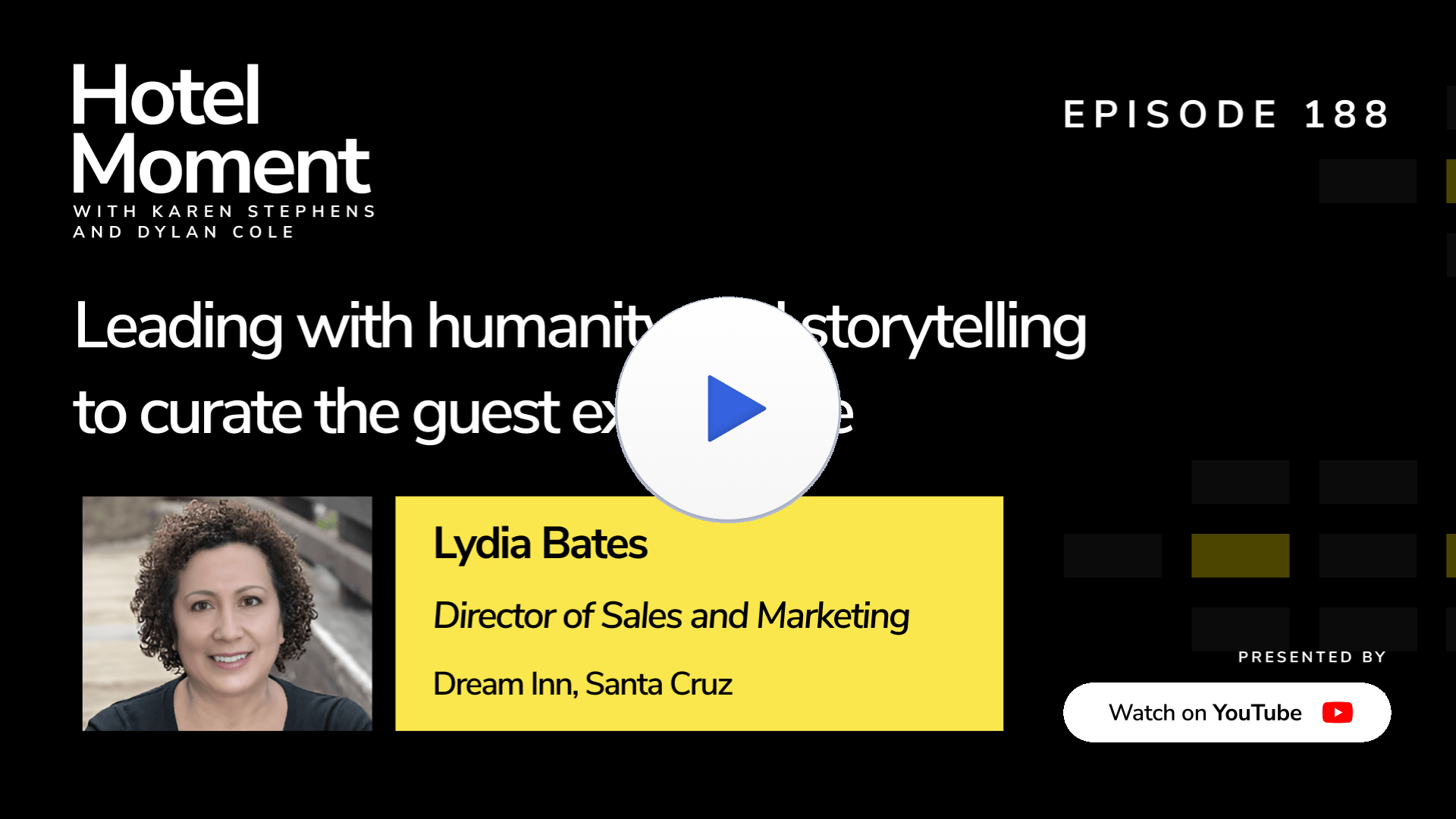
The future of hospitality is human. In this episode of Hotel Moment, Karen Stephens sits down with Lydia Bates, Director of Sales and Marketing at Dream Inn Santa Cruz, to explore how one of California’s most iconic beachfront hotels creates guest loyalty through storytelling, personalization, and genuine connection.
Lydia shares how Dream Inn uses its on-site reservations team, local expertise, and pre-arrival communication to shape the guest experience before arrival. She also explains how the hotel captures guest preferences to turn OTA visitors into direct bookers and uses targeted campaigns to create more meaningful conversations.
Discover how Dream Inn brings creativity to every season with personalized campaigns that build and prove that human-led hospitality remains one of the strongest advantages for independent lifestyle hotels.
Media
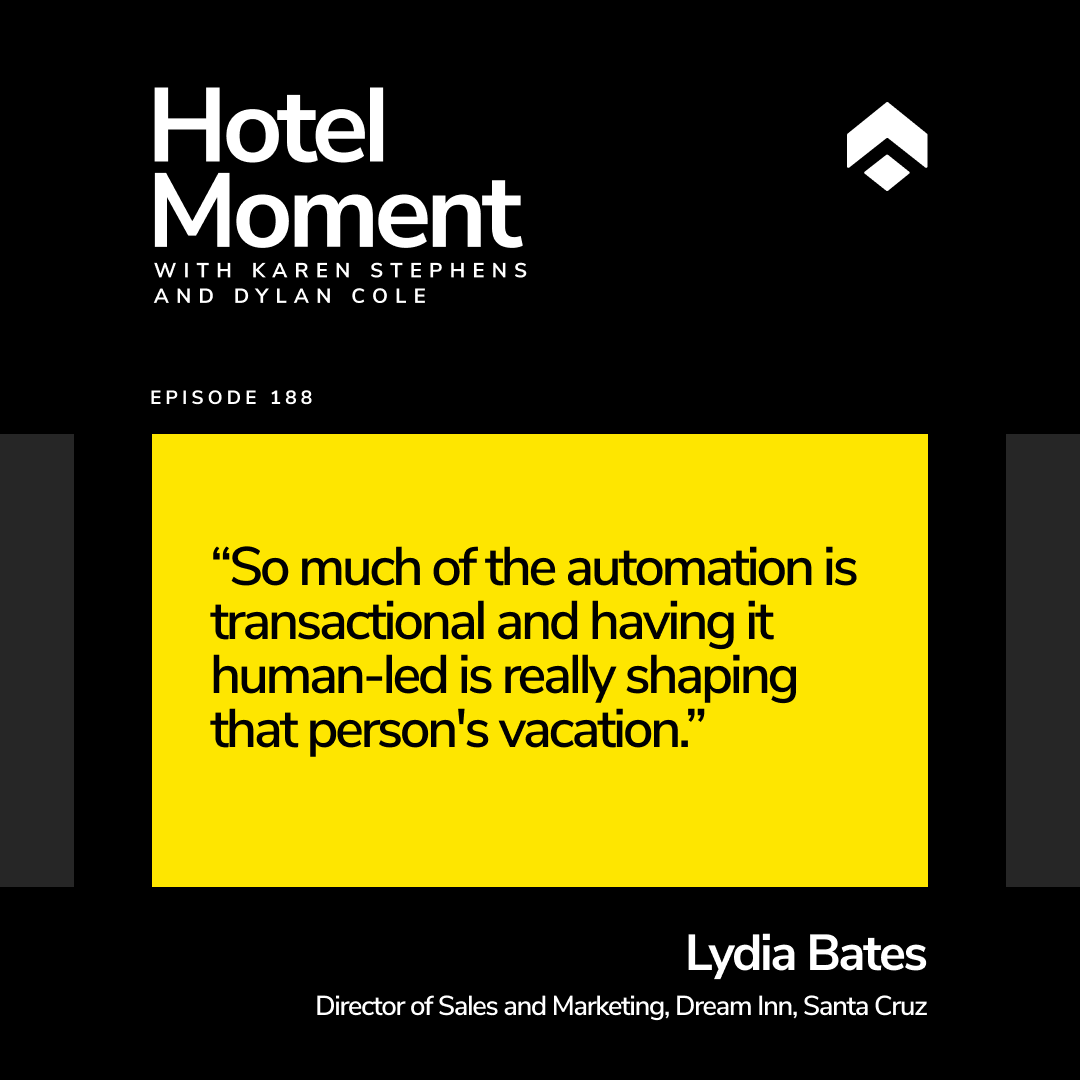
Winning with human-led hospitality
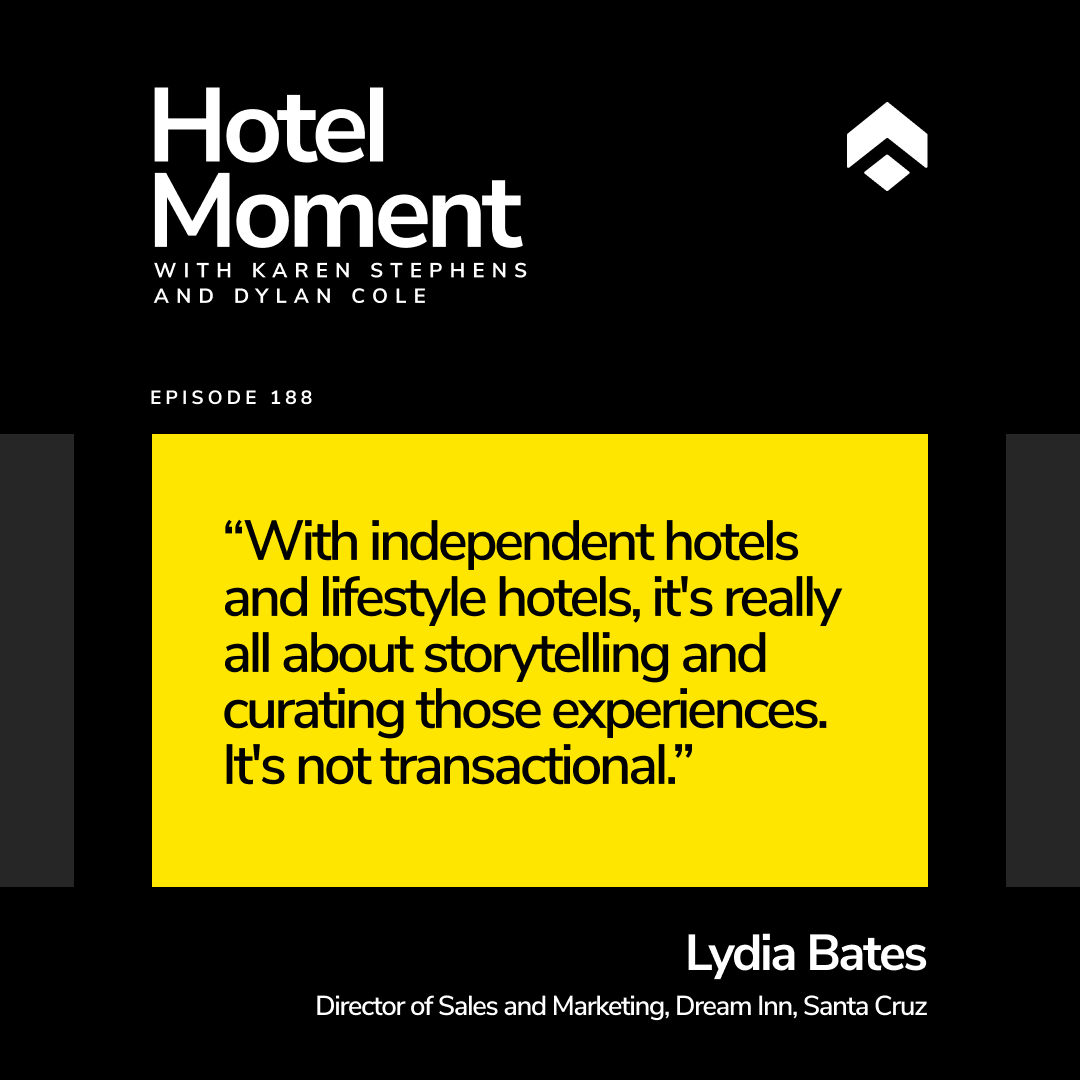
Hospitality is about storytelling
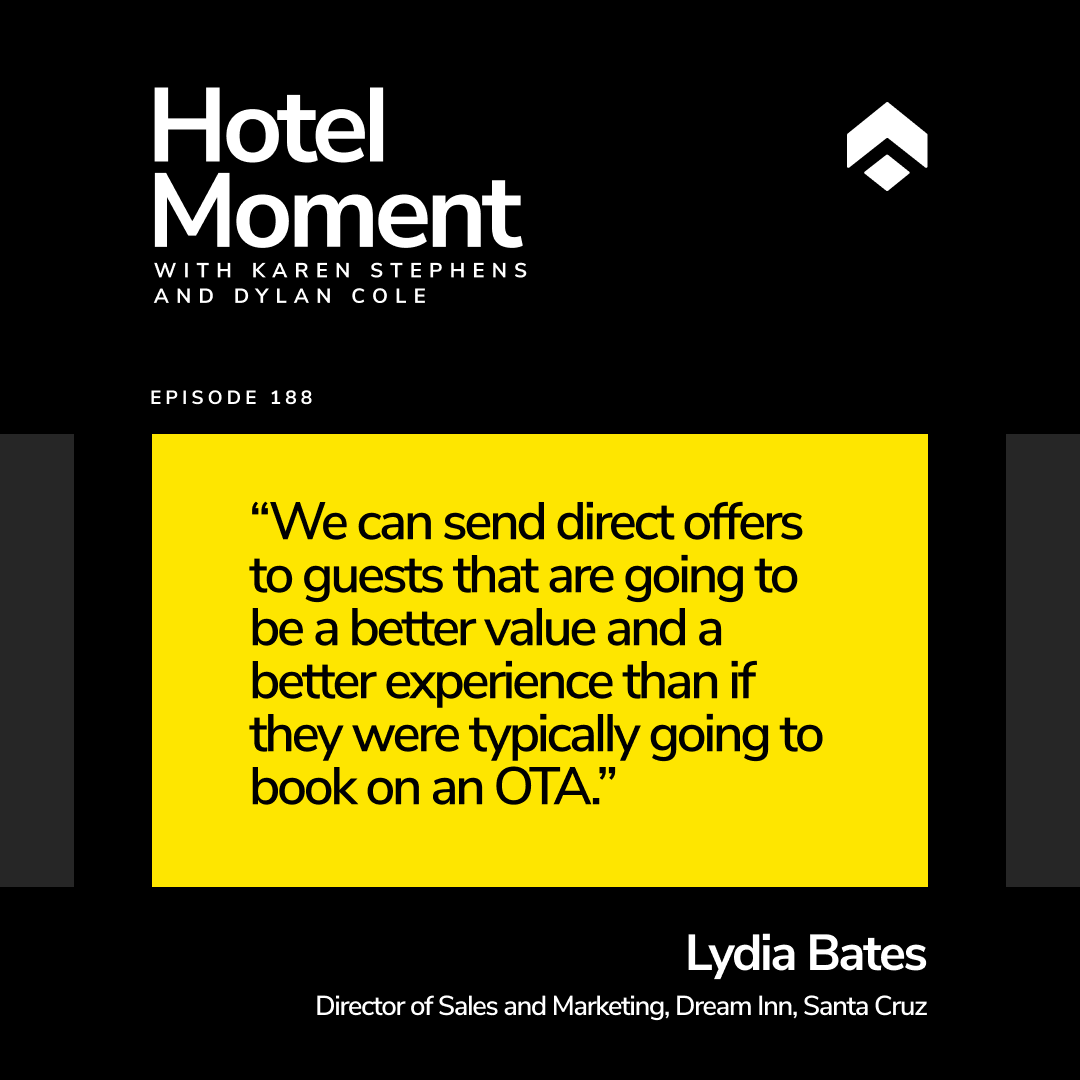
How to win more direct bookings
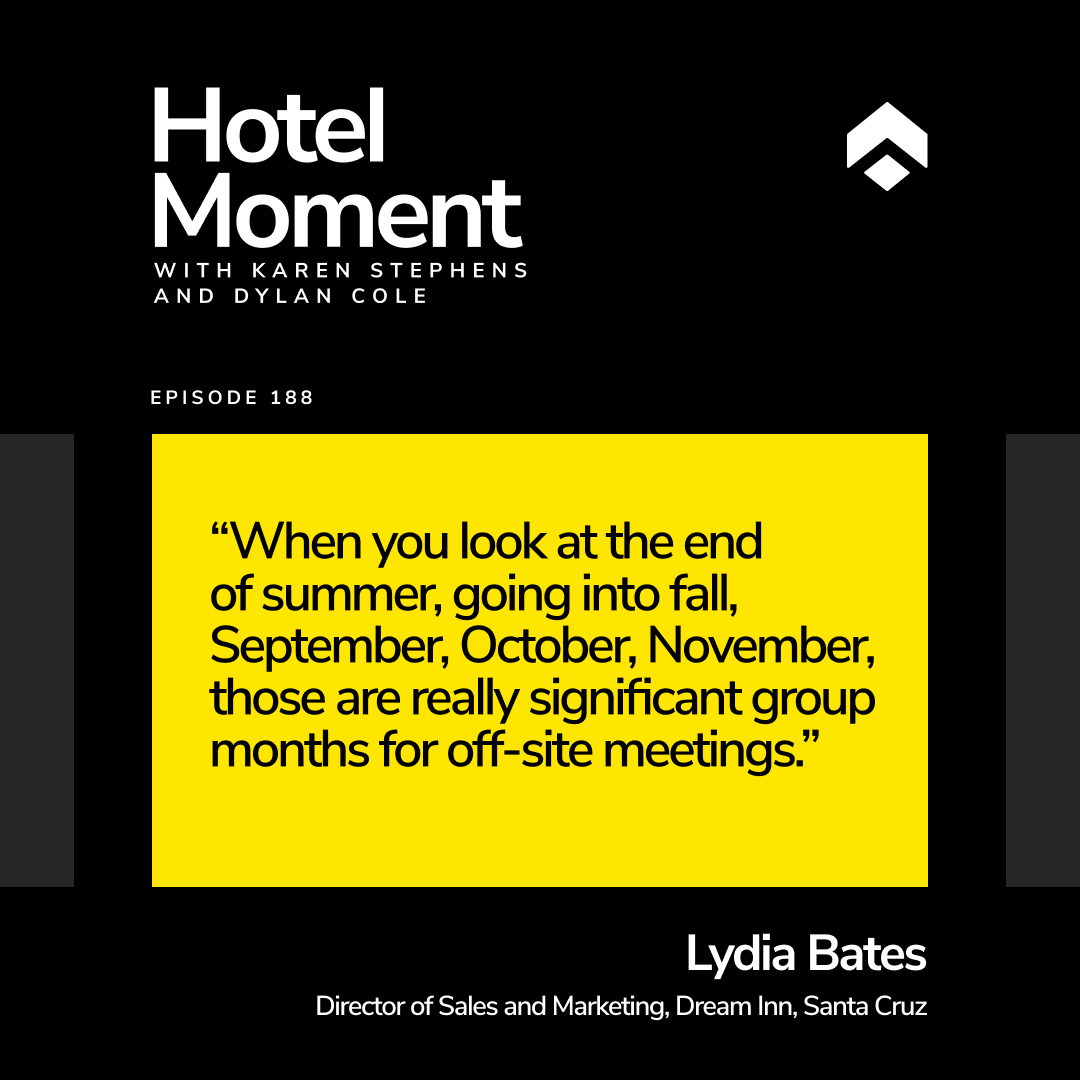
Capitalize on off-site opportunities
Meet your host
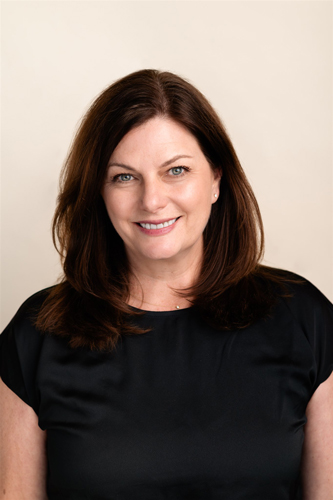
Karen Stephens
As Chief Marketing Officer at Revinate, Karen is focused on driving long-term growth by building Revinate’s brand equity, product marketing, and customer acquisition strategies. Her deep connections with hospitality industry leaders play a key role in crafting strategic partnerships. Karen has more than 25 years of expertise in global hospitality technology and online distribution — including managing global accounts in travel and hospitality organizations such as Travelocity and lastminute.com
As the host of The Hotel Moment podcast, she interviews top players in the hospitality industry. Karen has been with Revinate for over 11 years, leading our global GTM teams. Her most recent transition was from Chief Revenue Officer, where she led the team in their highest booking quarter to date in Q4 2023.
Watch the video
Transcript
[00:00:00] Lydia Bates: With independent hotels and lifestyle hotels, it’s all about storytelling and really curating those experiences. So it’s very different. It’s not transactional. So I feel like that is important, especially for a lifestyle hotel such as Dream Inn.
[00:00:19] Karen Stephens: Welcome to the Hotel Moment Podcast presented by Revinate. I’m Karen Stephens, Chief Marketing Officer, joining you from sunny San Francisco, California.
[00:00:27] Dylan Cole: And I’m Dylan Cole, Managing Director of Revinate Europe, calling in from Amsterdam.
[00:00:32] Karen Stephens: This is the podcast where we explore how technology shapes every moment of the hotelier’s experience. And more importantly, how the right technology delivers real outcomes for hotel teams and guests alike.
[00:00:42] Dylan Cole: From revenue strategy and guest communication to operations and marketing, we sit down with the people transforming hospitality around the world.
[00:00:51] Karen Stephens: Depending on the conversation, sometimes it’ll just be me behind the mic.
[00:00:54] Dylan Cole: And sometimes it’ll be me, bringing a European perspective and stories from across the global hospitality industry.
[00:01:01] Karen Stephens: Whether you’re a hotelier, a tech enthusiast, or just curious about where hospitality is headed.
[00:01:06] Dylan Cole: You’re in the right place. Let’s get into it.
[00:01:08] Karen Stephens: Hello and welcome to the Hotel Moment Podcast. I’m your host, Karen Stephens, the Chief Marketing Officer of Revinate. And today we’re excited to welcome Lydia Bates, Director of Sales and Marketing at Dream Inn Santa Cruz, one of California’s most iconic beachfront lifestyle hotels. Under Lydia’s leadership, the property continues to focus on genuine hospitality and creating experiences that begin long before the guest ever arrives at the hotel. Lydia joins us to discuss human-led sales, direct guest relationships, pre-arrival engagement, and how lifestyle hotels can navigate seasonality while driving stronger revenue. So without further ado, welcome to the podcast, Lydia.
[00:01:47] Lydia Bates: Hello, Karen. Thank you for having me.
[00:01:49] Karen Stephens: I’m very excited that you’re here because I’ve actually stayed at the Dream Inn. It’s one of my favorite properties, so I’m also based in Northern California. And for me, the Dream Inn is this beautiful gem that I can go escape to right on the beach. So can you just start by telling our audience a little bit about the history of the property, where it’s located, and all that good stuff?
[00:02:09] Lydia Bates: Wonderful. So Dream Inn is located next to the wharf in Santa Cruz, and it is the only and exclusive beachfront property in Santa Cruz. So, 165 rooms and suites, all ocean view. Very iconic, as you mentioned, because the first phase of the hotel was built in the ’60s and continued to build from there through the ’80s, and we have generations of guests that have enjoyed the Dream Inn — bringing their kids and then eventually bringing their grandkids. So it’s truly a very special place to be.
[00:02:47] Karen Stephens: It’s really cool. It’s got this mid-century modern vibe, and as you said, everything is beachfront. You’ve got beach volleyball right below the balconies, an awesome pool area. So honestly, you just really feel like you’re on vacation the minute that you hit the door. So, absolutely love it. Yeah. So you mentioned a lot of the families that have been coming here for generations, iconic property. I think hospitality, though, is increasingly becoming more and more automated, but Dream Inn still places a strong emphasis on that genuine human connection. So why do you believe that human-led sales still play such an important role in driving direct revenue?
[00:03:23] Lydia Bates: Well, I think because so much of the automation is transactional, and having it human-led is really shaping that person’s vacation, girls’ trip, it could be an offsite meeting — all of those things. So really trying to find out what the client wants and shaping that vacation or trip or offsite for them.
[00:03:44] Karen Stephens: Yeah, so what originally drew you into hospitality? So we were talking before we started recording. I know that you spent some time in Tahoe, which is another one of my favorite places in California. So what originally got you into this business? What excites you most about representing a property like the Dream Inn, or Resort at Squaw Creek, which you did before that?
[00:04:02] Lydia Bates: That’s right. So really, I did a big shift. I started off in engineering in the Bay Area and would spend weekends up in Tahoe skiing, snowboarding, and then decided to make a shift and moved to Tahoe and looked at, okay, where can I transfer my skills? And so, in doing that, I looked at hospitality and took a risk and started there, and I started with the North Lake Tahoe Resort Association, which is kind of a reversal of probably what most people do. Started there and then moved on to the private sector, and that was what brought me to Resort at Squaw Creek and then other resorts after that.
[00:04:41] Karen Stephens: Well, that’s fantastic. So I was sharing with Lydia before we started that I also have a spot up in Tahoe, and I think a lot of people can appreciate it — it is really hard to get a real job. So I love it that you have an engineering background and somehow you parlayed that into getting into hospitality, and now that is your career. So now that you’ve got into hospitality — ’cause now you have options — you’re out of Tahoe, you’re in Northern California, but you stayed in hospitality. So tell me a little bit about that.
[00:05:10] Lydia Bates: I think one of the main aspects is really creating a wonderful experience for people and seeing how they react to that and how happy they are. And also, you know, when working with teams and seeing how they create experiences for people as well. It’s very gratifying.
[00:05:27] Karen Stephens: When you think about your current position — so you oversee both sales and marketing at Dream Inn, and oftentimes those things go together, but they are a little bit of a different role. So when you think about those two roles coming together, do you think hotels are having to work harder to create that genuine guest experience before a hotel stay even begins?
[00:05:47] Lydia Bates: I do think so, because especially with independent hotels and lifestyle hotels, it’s all about storytelling and really creating those experiences, curating those experiences. So it’s very different. It’s not transactional. So I feel like that is important, especially for a lifestyle hotel such as Dream Inn.
[00:06:08] Karen Stephens: Absolutely. And give me an idea or an example of how you create that experience even before your guests get onto the property. So, obviously, once they get onto property, you’re there — but how do you help them understand what the experience is going to be and curate that stay even before they get there?
[00:06:25] Lydia Bates: So part of that is pre-arrival — it’s really the messaging to the guest. Well, essentially, if I roll back a little bit, it goes back to really seeking out information from the guests, if they’re calling in to our reservations team — and we have on-site reservations, which I feel is very important. So they’re communicating with people that live and work here and have firsthand knowledge of where to dine, what activities to do, if they have family, what to do, if they like hiking, where to go — you know, all the water activities. So it really starts there, and then it continues on after they book, with pre-arrival communication, letting folks know what is going to be happening while they’re here as well.
[00:07:11] Karen Stephens: So as we mentioned, the Dream Inn is an independent hotel, so many hotels, especially independents, still need to rely heavily on online travel agencies for visibility, for occupancy. So how do you think lifestyle hotels like the Dream Inn can build stronger direct booking strategies while still maintaining those healthy distribution partnerships? How do you walk that line?
[00:07:34] Lydia Bates: Certainly, the OTAs really have an important position with the hotels, and it’s a great opportunity for us to create exposure in the marketplace for a hotel. And then, essentially, it’s about converting that OTA client into a direct client. And so what we do on property is, first of all, is really gathering their email address so that we can communicate with them. Also, letting them know that by providing that email, we can send direct offers to them that are going to be a better value, that are going to be a better experience than if they were typically going to book on an OTA.
[00:08:15] Karen Stephens: So let me ask you — I know you use Revinate on your property, where you can set up a lot of those automated campaigns. So are you using all those? So this is something we talk about, where — what is the cadence when somebody does give you their email? Are you reaching out on a regular basis, once a year? Are you doing birthday campaigns? Or what are you doing to kind of say, “Hey, remember us”?
[00:08:37] Lydia Bates: Exactly. So there’s a number of different ways, and I think the first one, especially when you start with an OTA — you’re converting it to a direct client, you send an offer to bring them back. And so that’s where that starts. But also gathering information that is relevant to them. So part of that is, obviously, birthdays, anniversaries, that type of thing. Are they really into the outdoors? Do they like to surf? Are they bringing their family? Those kind of things — gathering that information and really targeting that guest in an email or other communication that relates directly to them. Because I think so many people get emails, email campaigns, and they get overloaded. So if we can be very specific and send information that relates to them, that is of interest to them, and not send the other information that could be of a broader scope.
[00:09:31] Karen Stephens: I think you hit it on the head. People are inundated now, and we really talk about — when you ask for somebody’s information and you gather their preferences, make sure that you then use that information. You send relevant offers so that you don’t just die in a random inbox of things that they’re not interested in.
[00:09:50] Lydia Bates: Exactly. And so it’s being really, really mindful and trying to curate that communication with them.
[00:09:57] Karen Stephens: Yeah, absolutely. So, obviously, Santa Cruz experiences natural seasonality. This is a beach — it’s really warm and great in the summer, and then it changes, and I’m sure travel demand fluctuates with that. So how do you prepare for those shifts while still maintaining a great guest experience? And this probably dovetails a little back into getting that direct database filled up. But now that you’re out of summer season, where most people come, what strategies do you use to get occupancy when you’re out of season?
[00:10:24] Lydia Bates: So there’s multiple avenues to create business, and part of that is on the group side. So when you look at the end of summer going into fall — September, October, November — those are really significant group months for offsite meetings and events. We are fortunate to be so close to Silicon Valley and San Francisco and other areas, so we really target that market for stays, and then also for leisure stays on top of that. It could be older clientele — the kids have left home, are away at college — looking forward to travel without the crowds, and so really targeting that audience as well. And then also, actually embracing the bad weather sometimes — which, we had a really successful campaign last year. I don’t know if you know this, but we have king tides here, and those are really significant storms — big waves. It’s either really large waves or really low tide, where the beaches are pretty expansive and you could take long walks along the beach. So it’s the extreme of both. So what we did was embrace it and developed an offer called “Ride Out the Storm.” And so what we included in that are things like cozy types of things — storm-watching off your balcony. You know, as I mentioned, all the rooms have 100% ocean views, so really cozying up there to just view the storms. And then we also included a puzzle for people to enjoy, some digital reading, and so really kind of embracing that weather for a nice getaway. So just trying to be creative with some things, you know, in a season that is not normally directed towards summer weather and being outside all the time.
[00:12:11] Karen Stephens: I love that idea, because the coast of Santa Cruz is such a beautiful area — the natural beauty, and it is very dramatic, right? It’s cliffs and beautiful trees. So I love the idea of having king tides, big waves — it’s like you don’t always need to swim in it, you can watch it and be cozy and comfortable in the room. So I think that’s a fantastic idea, and a great idea, I think, for our listeners — thinking about, all seasons have opportunity, right? You just need to be a little creative. So talk to me a little bit about how your team comes up with these campaigns and these ideas. How do you ideate for things like that?
[00:12:45] Lydia Bates: For that, it’s really — we brainstorm quite a bit, and so for every team member, their ideas are all really important to me. And so really kind of engaging with the team, sharing ideas, selecting what we think we can run with, and then crafting it from there. So I have a sales team, event team, and then also a reservations team, so there’s a lot of creativity to draw from.
[00:13:10] Karen Stephens: That’s so cool. So as hospitality becomes more digital and more competitive. We used to say, you know, if you’re a hotel, you’re competing with a hotel down the street. In your case, there’s really no competition — we’ve established that, I mean, I’ve been there. But now you’re really competing in a digital landscape for vacation dollars. So if somebody wants to go somewhere to a beach, right? Where do you think the biggest opportunities exist for hotels to build stronger long-term guest relationships, so that you’re competing for that first stay, but then also for the repeat?
[00:13:43] Lydia Bates: I think part of it is, we’re part of Ensemble Hospitality, so we do have other hotels in California and throughout the country, and so really working on partnerships with our sister properties is really helpful. So for us, it’s beachfront, all the outdoor activities, family-friendly. But then we also have another hotel in Carmel that is right in the heart of wine country, and so drawing from that — so maybe our guests might be interested in a wine country escape, and then I guess they might be interested in a beach escape as well. So working with each of those properties, and it really creates a unique experience beyond what we see with the branded hotels.
[00:14:29] Karen Stephens: I love this. So when you’re gathering preferences — this is a very tactical question — but when you’re gathering preferences from your guests on property, then if I understand you correctly, you are asking them about things that they prefer that might not even be on your property. Is that right?
[00:14:43] Lydia Bates: Exactly.
[00:14:47] Karen Stephens: Like wine tasting, you know — whatever it might be. And then you’re sharing those databases, in terms of — you’re cross-promoting for those. So that’s really important. So I think, again, independent hotel, but part of a collective with sister properties — they all have their unique vibe and amenities. But you’re able to kind of cross-promote with your guests, which I think is really powerful, because if you’re an independent just on your own, you’ve got the OTAs and you’ve got yourself.
[00:15:09] Lydia Bates: That’s right. And really tapping into our other colleagues, because if a guest really enjoys this experience here, they’re going to have a similar experience at another hotel that is under the umbrella of Ensemble.
[00:15:26] Karen Stephens: I love that. That’s great. So if a hotelier is listening to this episode and wants to improve direct bookings and strengthen guest loyalty, what’s the very first thing you think that they should do?
[00:15:35] Lydia Bates: Really get to understand the guest and what’s important to them, those hot buttons, and really direct your communication towards them in that way.
[00:15:47] Karen Stephens: This is my favorite last question I might have ever asked, of all time, because again, I’m gonna go back to how you started your career. I always think it’s interesting when people are able to live where they want to live and do what they want to do and find a way to get gainful employment out there, right? So for our younger listeners who are thinking, “Ah, I want to live my life and have all the experiences” — what advice would you give for somebody who just wants to live in a cool destination and parlay their career? Like, how would you advise them to figure out how to get into hospitality to be able to facilitate this kind of life?
[00:16:22] Lydia Bates: Definitely. So for me, I’m passionate about where I live. Obviously, you’ve seen all the beautiful places where I’ve lived, and I think it makes it really easy to sell the hotel because I’m passionate about it. I love where I am. And I think tap into that passion — for younger folks that are looking for a career path, starting out, it doesn’t have to be in sales or in marketing. It could be in operations, it could be at the front desk, reservations. Try it out, see if you like it. And there is a huge growth opportunity within hospitality, in many different directions. And essentially it becomes easy because you’re promoting a destination that you love. Right..
[00:17:06] Karen Stephens: Do what you love. I say it all the time. Well, thank you, Lydia. It’s been a real pleasure. Thank you so much.
[00:17:15] Outro: Thank you for joining us on this episode of Hotel Moment by Revinate. Our community of hoteliers is growing every week, and each guest we speak to is tackling industry challenges with the innovation and flexibility that our industry demands. If you enjoyed today’s episode, don’t forget to subscribe, rate, and leave a review. And if you’re listening on YouTube, please like the video and subscribe for more content. For more information, head to revinate.com/hotelmomentpodcast. Until next time, keep innovating.
Episodes
Hotel Moment
WITH KAREN STEPHENS
Subscribe for updates on your favorite platform